



Grüne Projekte
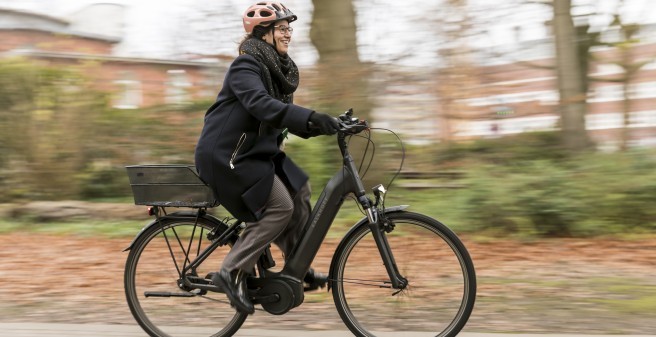
Ob durch technische Neuerungen im Energiemanagement, die Verbesserung unserer Prozesse oder die Reduktion des Autoverkehrs auf dem Gelände – wir haben bereits viele wegweisende Umweltprojekte realisiert.
)_contentbild2.jpg)


Papierloses Krankenhaus
Das UKE hat als erstes Universitätsklinikum in Europa flächendeckend eine elektronische Patient:innenakte eingeführt die einen papierlosen Klinikalltag ermöglicht.
Weitere Tipps zum Papier sparen gibt es hier .
Lesen Sie auch mehr zum Umgang mit Papier im UKE unter dem Punkt Grüne Fakten
.
Rund ums Fahrrad
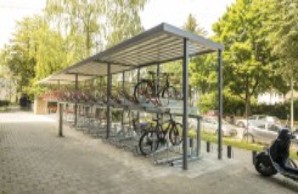
Unter den Mitarbeitenden des UKE gibt es eine Menge Radler. Das UKE ist bereits einmal als Hamburgs fahrradfreundlichster Arbeitgeber ausgezeichnet worden. Wir sorgen dafür, dass ausreichend Fahrradstellplätze zur Verfügung stehen.
Seit Oktober 2021 besteht zudem das Angebot des Fahrradleasings.
Mit Dr. Bike gibt es eine eigene Fahrradwerkstatt auf dem UKE-Gelände, in der UKE-Beschäftigte ihr Rad vergünstigt reparieren lassen können.
In regelmäßigen Abständen findet zum Diebstahlschutz eine Kodieraktion statt. Außerdem können Interessierte ihr Fahrrad waschen lassen.
UKE-Mitarbeitende können sich hier informieren.
Mehrwegtassen und -schalen
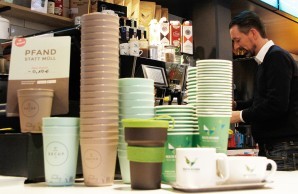
In den Health Kitchen Bistros können Kaffeeliebhaber:innen ihr Getränk to go im Pfandbecher von RECUP oder Mehrwegbecher bestellen, beziehungsweise einen eigenen sauberen Thermobecher mitbringen. Das spart 10 Cent pro Getränk und schont die Umwelt. Durch die Einführung des Pfandsystems werden im UKE pro Monat mehr als 5.000 Einweg-Pappbecher eingespart.
Seit einigen Monaten besteht zudem die Möglichkeit, Speisen in den Mehrweg-Schalen des Systems REBOWL mitzunehmen. Die Schalen, die fünf Euro Pfand kosten, werden in zwei Größen und mit Deckel angeboten, sodass die Speisen luftdicht und auslaufsicher transportiert werden können. Sie sind spülmaschinenfest und mikrowellentauglich (ohne Deckel). Sie können in allen teilnehmenden Cafés und Restaurants zurückgegeben werden.
Energiemanagement am UKE
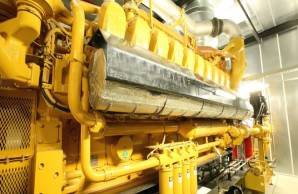
Ein erfolgreiches System: Die Energie-Sparziele des UKE-weiten Energiemanagement-Systems nach DIN EN ISO 50001 wurden seit 2016 jedes Jahr deutlich übertroffen. Das Blockheizkraftwerk sorgt jährlich für eine Vermeidung von rund 4.000 Tonnen CO2.
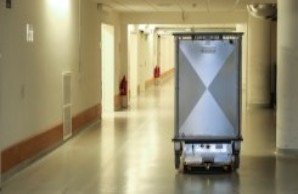
Fahrerloses Transportsystem (FTS)
Im UKE sind sämtliche Versorgungsprozesse (Supply Chain) strukturiert organisiert. Die Versorgungskette in den zentralen Klinikbauten des UKE erfolgt über ein immissionsfreies, fahrerloses Transportsystem (FTS), das die Produkte bedarfsorientiert für die Patient:innenversorgung automatisiert bis auf die Stationen liefert.
Über das FTS werden sämtliche Warenströme wie die Versorgung der angebundenen Bereiche mit medizinischem Sachbedarf, Sterilgut, Leergut für die Entsorgung von Glas und infektiösem Müll, Speisen, Getränken, Apothekenartikeln sowie Wäsche gesteuert. Auch die Entsorgung der Bereiche erfolgt über das FTS.
Das FTS umfasst ein Streckennetz von 2,5 Kilometern. Zur Durchführung der Transporte sind 33 TransCars im Einsatz. Die Auftragssteuerung erfolgt über ein automatisches Identifikationsverfahren (RFID) und zur Navigation wird das WLAN-Netz genutzt.
Für die Ver- und Entsorgung stehen 350 Edelstahl-Universalcontainer sowie 600 Wäschecontainer zur Verfügung. Die Reinigung der Container und Boxen erfolgt nach jedem Transport über die in den Gesamtprozess integrierte Boxen- und Containerwaschanlage. Im Durchschnitt werden täglich 1.000 Transporte über das FTS durchgeführt.
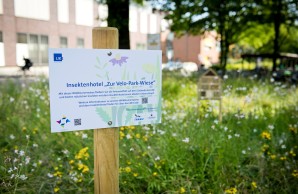
Wildblumenwiese
Das UKE verfügt insgesamt über ca. 80.000 m² Grünfläche, auf denen zahlreiche Pflanzen und über 900 Bäume angesiedelt sind. Zur Förderung der Biodiversität wurde im Jahr 2021 erstmalig eine Wildblumenwiese angelegt. Im Rahmen dieses Pilotprojektes wurde durch die naturnahe Umgestaltung ein vielfältiges Angebot an heimischen Wildpflanzen geschaffen. Es bietet Lebensraum für zahlreiche Insektenarten, für die dort nachfolgend ein bezugsfertiges Insektenhotel aufgestellt wurde.
Die Umwandlung weiterer Flächen in Wildblumenwiesen soll folgen. Aktuell werden 2 Bienenstöcke von Mitarbeitenden mit Imkererfahrung überwacht und gepflegt.
Erfahren Sie hier weitere Informationen zu den Wildblumenwiesen im UKE .
Jod-Recycling
Das Universitätsklinikum Hamburg-Eppendorf (UKE) beteiligt sich seit Juli 2023 mit seiner Klinik für Diagnostische und Interventionelle Radiologie und Nuklearmedizin am Rücknahmeprogramm für unverbrauchte Röntgenkontrastmittel des Unternehmens Bracco.
In der hochmodernen Recyclinganlage am Standort Marbach am Neckar wird aus unverbrauchten Resten von Röntgenkontrast mitteln das Element Jod zurückgewonnen.
Aus dem zurückgewonnenen Jod werden verschiedene Jodsalze hergestellt, die derzeit vor allem in der chemischen Industrie Verwendung finden. Durch das Sammeln und die Rückgabe ungebrauchter Kontrastmittelreste wird der anfallende Abfall an Jodkontrastmitteln in der Klinik reduziert, der Eintrag von Jodkontrastmitteln in das Klinikabwasser reduziert und die begrenzte Ressource Jod effizient genutzt.
Im Zeitraum von Juli 2023 bis Mai 2025 hat das UKE insgesamt 11 Kanister mit einem Gesamtgewicht von 85,6 Kilogramm zurückgegeben. Die Teilnahme an diesem Programm leistet einen Beitrag zur Umsetzung der Ziele für nachhaltige Entwicklung (Sustainable Development Goals, SDGs) der Vereinten Nationen – insbesondere der Ziele Nr. 6 (Sauberes Wasser), Nr. 12 (Abfallvermeidung, Recycling) und Nr. 14 (Schutz mariner Lebensräume).
Das vollständige Testat finden Sie unter Jod-Recycling macht Sinn.
