



3R Research: How animal models can be replaced
Advanced in-vitro and in-silico models and other 3R methods already play an important role in several areas of research at the UKE. In addition, scientists are striving to further reduce the use of sentient model organisms and prefer less sentient species such as Drosophila melanogaster (fruit fly) and Danio rerio (zebrafish) embryos.
In accordance with www.animatch.eu , a database is to be created to facilitate the local exchange of animal tissue and liquid biopsy samples, thereby preventing unnecessary animal use.
Examples of research approaches already in use or under development can be found in the list below.
▷ Reduce and replace animal testing


Research on human tumours
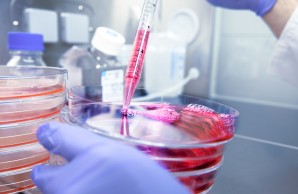
In order to optimise gene therapy vectors – known as ‘gene ferries’ – for future use in cancer therapy, the ENDomics Lab team led by Jakob Körbelin, in collaboration with Martin Trepel and Bruno Märkl from Augsburg University Hospital, is using tumours removed from the intestines or kidneys of cancer patients. In the past, similar work was carried out in mouse models.
Hamburg Center for Kidney Health: Research on kidney organoids
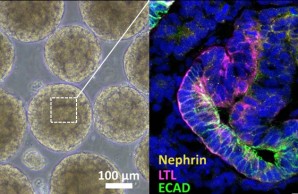
In order to better research severe kidney diseases, UKE scientists Sandra D. Laufer, Fabian Braun and Tobias B. Huber use so-called pluripotent stem cells, which can be generated from human skin, blood or urine, for example. The reaction of these cell organoids to disease-relevant factors is comparable to that of human kidney tissue, thus providing meaningful insights into the research of Fabry disease and other kidney diseases.
The UKE researchers contributed model systems to this project
Testing thrombosis susceptibility in-vitro
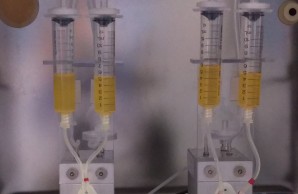
A simple and inexpensive in-vitro testing system developed by researchers at the UKE can be used to test the thrombogenicity of vascular prostheses. This enables more precise evaluation than before and reduces the need for animal testing.
Publication supported by the UKE Open Access Publication Fund: https://www.nature.com/articles/s41598-024-77266-0
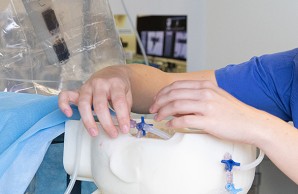
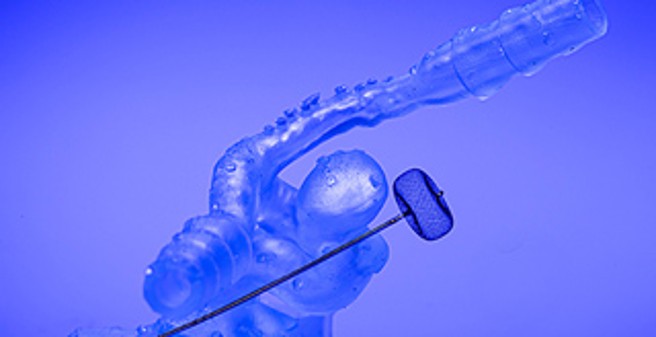
HANNES: Artificial tissue for catheter use
A realistic model of human vessels created using 3D printing: in cases such as brain aneurysms, the HANNES tissue model is already helping to treat patients using state-of-the-art catheter methods – without animal testing.
More at HANNES lässt tief blicken (in German)
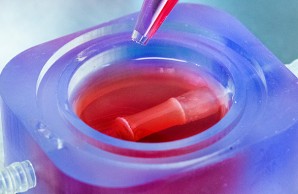
Tissue engineering
In future, growing cells in the laboratory will not only help to save lives, but may also reduce the need for animal research. Scientists at the UKE have developed a method for producing heart muscle cells from pluripotent stem cells. This method can already be used to produce heart valve prostheses and a type of mini heart chamber (tube) for children with hypoplastic left heart syndrome.
More at Eine Herzkammer aus dem Labor (in German)
▷ Refine: Improving animal testing
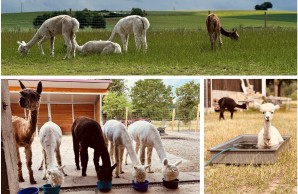
Alpacas produce important antibodies
Alpacas have a special type of antibody that is important for the treatment of numerous diseases. Our five alpacas, which live on pasture all year round, are immunised six times over a period of several weeks with a specific antigen. After completing the immunisation, they donate 100 ml of blood. A small prick for an alpaca – a giant leap for biomedical research. More about alpacas in the service of science
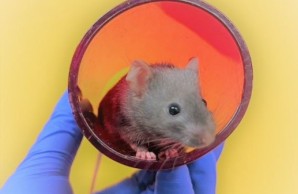
Tunnel handling and cupping
At the UKE animal facility, mice are removed from their cages using gentle methods: tunnel handling, in which the animals enter a plastic tube of their own accord; using the small houses provided in the cage; or gentle handling by hand (cupping). This improves the mices' well-being.
Read more about refinement in animal husbandry here (in German).