

The 3R Board
A multidisciplinary team forms the board of the Hamburg Center of 3R Research under the leadership of Prof. Dr. Maike Frye, Professor of 3R Methods and Vascular Biomedicine, accompanied by representatives of the Dean's Office and the UKE's animal welfare officers.
Further details can be found under Contact .
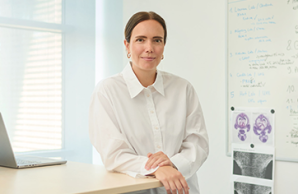


Prof. Dr. Maike Frye
Prof. Dr. Maike Frye from the Institute of Clinical Chemistry and Laboratory Medicine is researching how changes in the tissue environment affect endothelial cells. She is developing physiologically relevant stiffness environments for primary cell cultures, which will reduce the need for animal testing. Prof. Frye is involved in new degree programmes at the University of Hamburg and integrates 3R Principles into animal testing courses and UKE graduate schools.
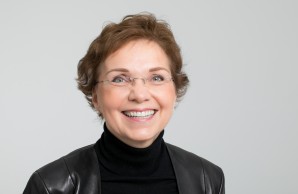
Prof. Dr. Petra Arck
Prof. Dr. Petra Arck is Vice Dean for Research at the Faculty of Medicine and Head of the Department of Experimental Foetal-Maternal Medicine at the Clinic and Polyclinic for Obstetrics and Prenatal Medicine at the UKE. In her scientific work, she uses technologies and approaches for studies on immune activation in pregnant women and unborn children, among other things. These methods offer valuable insights that are relevant to reproductive tissues.
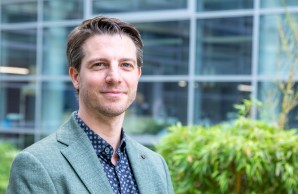
Dr. Manu Beerens
Dr. Manu Beerens from the Institute of Clinical Chemistry and Laboratory Medicine models the development of cardiovascular diseases in zebrafish. Several aspects of human cardiac electrophysiology are more faithfully recapitulated in zebrafish than in classical research animal models. In addition, the cardiovascular system develops very quickly in zebrafish.
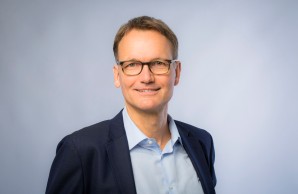
Prof. Dr. Heimo Ehmke
Prof. Dr. Heimo Ehmke heads the Institute of Cellular and Integrative Physiology and is involved in the identification and translational development of new treatment approaches for kidney and cardiovascular diseases. In various roles within the faculty, he is committed to establishing alternative methods to animal testing.
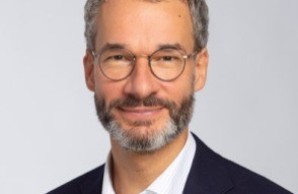
Prof. Dr. Manuel Friese
In his research in the field of neuroimmunology and translational medicine, Prof. Dr. Manuel Friese, Director of the Institute for Neuroimmunology and Multiple Sclerosis, uses stem cell-based human brain cells and brain organoids to advance our understanding of multiple sclerosis. The refinement of preclinical models through cutting-edge genetic engineering minimizes animal use and enhances their translational relevance.
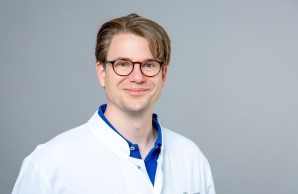
Prof. Dr. Samuel Huber
As clinical scientist, Prof. Dr. Samuel Huber, Director of the I. Medical Clinic and Polyclinic, is focused on finding a curative therapy for inflammatory bowel disease. Together with his team, he analyzes human samples and is using in-vitro techniques, among other things. Organoid cultures, multi-omics analysis and bioinformatics enable insights into human diseases and reduce animal use.
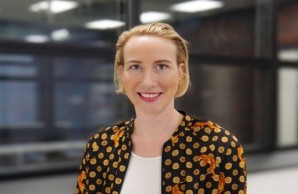
Dr. Sybille Köhler
Dr. Sybille Köhler heads a junior research group at the III. Medical Clinic and Polyclinic. Her research focuses on nephrocytes, kidney-like cells found in Drosophila flies. A whole range of biological pathways in Drosophila flies and humans are similar, which is why Drosophila flies can replace higher vertebrates such as mice in many areas of experimental research.
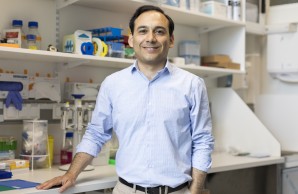
Prof. Dr. Pablo J. Sáez
Prof. Dr. Pablo J. Sáez heads a laboratory at the Institute of Biochemistry and Molecular Cell Biology at the UKE that investigates cell communication and cell migration. To analyze multifactorial phenomena in complex landscapes, he and his team use microfluidics as they mimic some properties of the tissue while enabling controlled analysis of cell dynamics.
Dr. Mareike Budack
Dr. Mareike Budack has been working as a veterinarian and animal welfare officer at the UKE since 2006. During this time, she was qualified as a specialist veterinarian for laboratory animal science and animal welfare. As an animal welfare officer, the 3R Principle forms the basis of her daily work. Her expertise as a veterinarian is particularly in demand for reducing the burden on animals during the planning and execution of experiments.
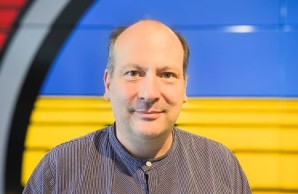
Dr. Matthias Braun
Dr. Matthias Braun is the animal welfare officer at the University of Hamburg. He has been working in animal welfare management and in the evaluation of animal-based and cell-based regenerative models and research projects since 2006. He coordinates the 3R initiatives and courses of the Federation of European Laboratory Animal Science Associations (FELASA) at the University of Hamburg.