Institute for Synaptic Physiology
Thomas G. Oertner
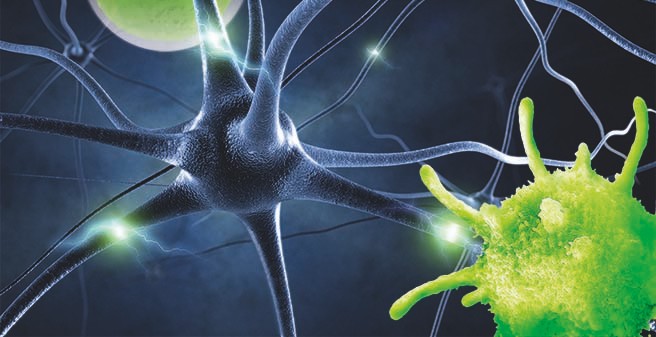
Neurons in the brain communicate through chemical synapses. Depending on the activity of pre- and postsynaptic cells, these communication channels can rapidly and persistently change their strength. These functional adaptations, collectively known as long-term plasticity, involve a large number of intracellular signaling systems. On longer timescales, new synapses are established between previously unconnected cells while other synaptic connections are completely removed. Together, these changes in the efficacy and connectivity of brain circuits are thought to be crucial for information processing and memory storage in the brain.
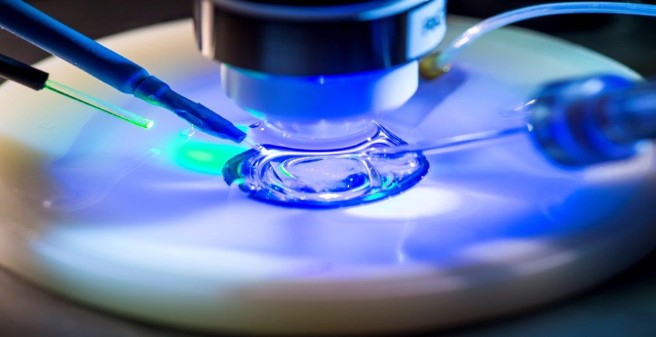
We develop optogenetic methods to stimulate identified neurons and to optically measure the amplitude of postsynaptic calcium transients in dendritic spines. Two-photon laser scanning microscopy allows us to perform such optophysiological experiments in intact brain tissue with high spatial and temporal resolution. Using genetically encoded probes, we monitor the activity of single synapses over several hundred stimulations and measure parameters such as synaptic potency and the probability of glutamate release. Optical induction of plasticity at individual, identified synapses allows us to investigate the underlying electrical and biochemical processes in great detail. The connectivity of our brain constantly changes in response to sensory experience (Huber et al., 2012). A central aim of our research is to understand the rules and molecular mechanisms that govern our extraordinary ability to learn and to remember.