

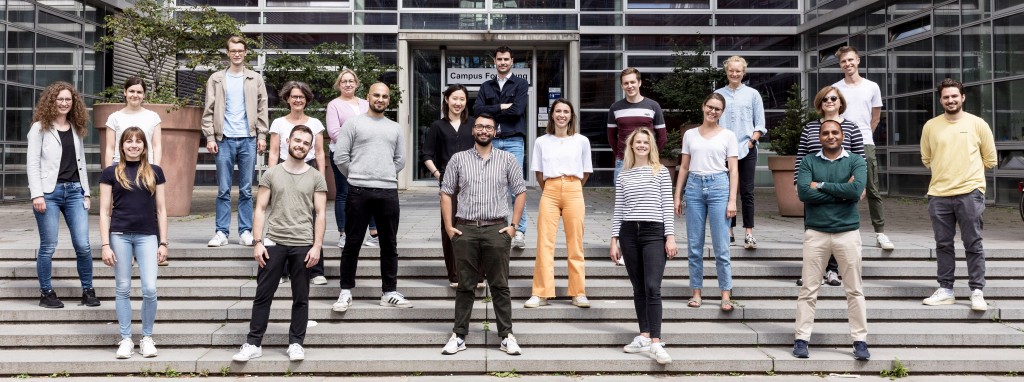

Institute for Inflammation and Carcinogenesis
We aim to identify the common principles governing immune responses and understand their implications for carcinogenesis.
Our research focuses primarily on T cells while also extending to other celltypes such as neutrophils, macrophages or dendritic cells. By investigating how immune-cell networks behave over time and within distinct organs during inflammation and cancer—and how they adapt to environmental changes—we seek to uncover the mechanisms underlying normal immune function, immune-mediated diseases, and cancer.
Our goal is to understand why immune responses sometimes protect the host against pathogens and cancer, yet in other contexts drive chronic inflammation, tissue damage, and inflammation-associated cancer. Finally we aim to improve immunotherapies and ultimately enhance survival outcomes for patients.
Link to our network - Grants
CRC 1192 - Immune-Mediated Glomerular Diseases SFB 1192
CRC 1328 - Adenine Nucleotides in Immunity and Infammation SFB 1328
CRC 1700 - Immune regulation in the liver: from homeostasis to disease SFB 1700
CRC 1648 - Emerging Viruses: Pathogenesis, Structure, Immunity SFB 1648
CRC 1713 - Maternal Immune Activation: Causes and Consequences SFB 1713
HORIZON ERC Grant - Tracking adaptation of naïve T cells to distinct organs to decode organ-specific immune diseases
HORIZON ERC Proof of Concept Grant - Actionable metabolite supplements to improve treatment response in pancreatic cancer