
Working Group: Diversity & Equity in Psychosocial Healthcare
- Description
- Projects
- Activities
- Team
-
Description
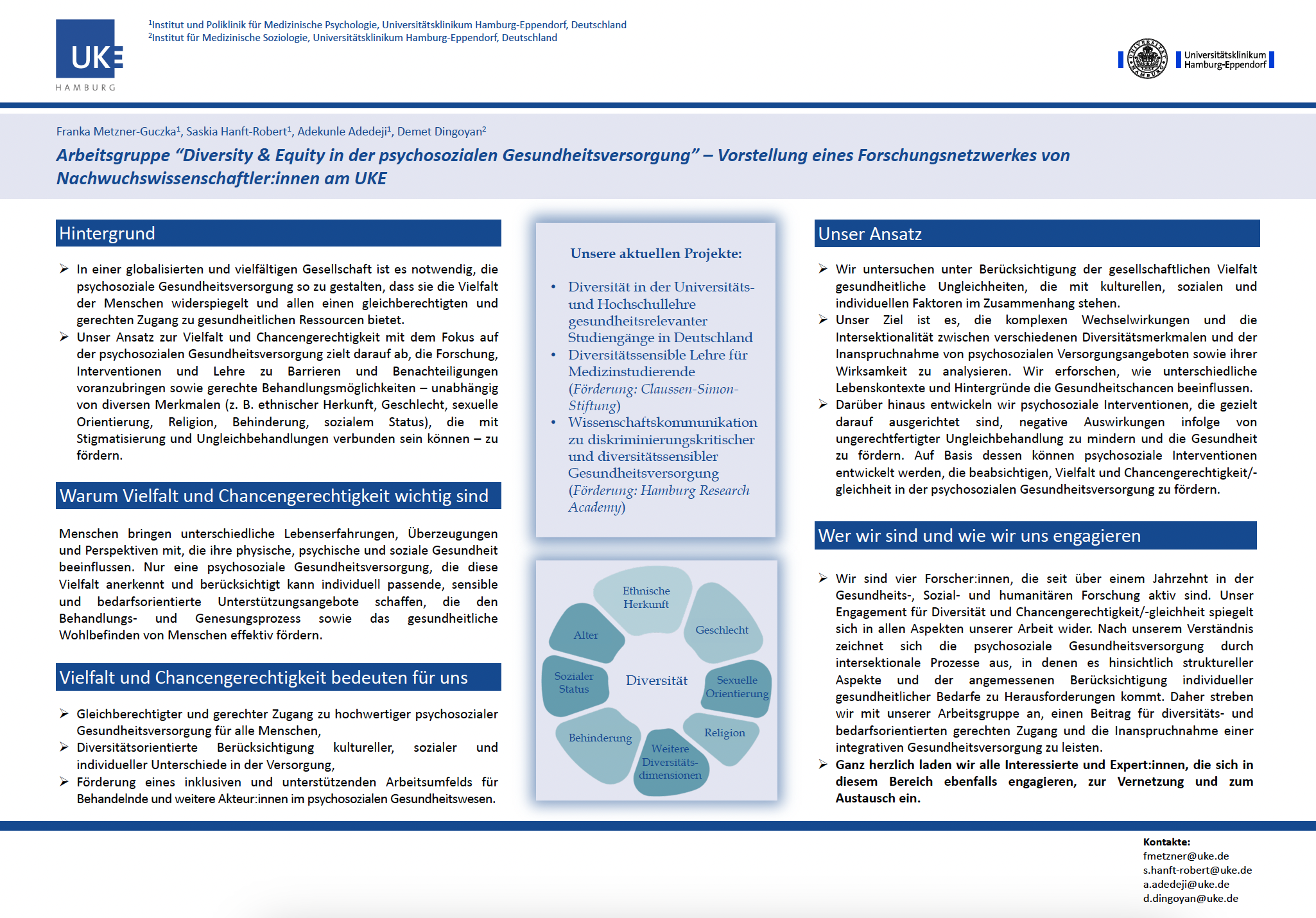
In today’s globalised and diverse society, it is crucial to design psychosocial healthcare systems that embrace and reflect the rich diversity of individuals. Equally important is ensuring fair access to health resources for everyone. Our focus on diversity and equity in psychosocial healthcare drives our efforts in research, intervention development, and education. We aim to tackle barriers and inequalities while promoting equitable treatment opportunities—irrespective of characteristics such as ethnicity, gender, sexual orientation, religion, disability, or social status, which may be linked to stigma and discrimination.
Why Diversity and Equity Matter:
Each individual’s unique life experiences, beliefs, and perspectives shape their physical, mental, and social well-being. A psychosocial healthcare system that values and integrates this diversity can provide tailored, sensitive, and needs-driven support, effectively enhancing treatment outcomes, recovery processes, and overall health and well-being.
What This Means to Us:
- Equal and just access to high-quality psychosocial healthcare for everyone
- Integration of cultural, social, and individual diversity markers into healthcare practices
- Fostering an inclusive and supportive work environment for healthcare providers and other stakeholders in psychosocial healthcare
Our Approach:
Our working group explores health inequalities through the lens of societal diversity, examining how cultural, social, and personal factors intersect with access to and the effectiveness of psychosocial healthcare. Our goal is to analyze the complex interactions and intersectionality between various dimensions of diversity and the utilization of psychosocial care services, as well as the effectiveness of those services. We investigate how different life contexts and backgrounds influence health outcomes. In addition, we develop psychosocial interventions specifically designed to mitigate the negative effects of unjustified unequal treatment and to promote health.
Based on this, psychosocial interventions can be developed that aim to promote diversity and equity in psychosocial health care. Our work includes targeted consultations, training sessions, and workshops for healthcare providers, students, trainees, and other professionals, helping them build competencies in diversity and equity.
-
Projects
Diversity in university-level teaching of health-related study programs in Germany (2024 – 2026)
[Funded by: Claussen-Simon-Stiftung]
In an increasingly diverse society, it is essential that universities and other educational institutions actively address diversity. Current and future healthcare professionals should be adequately trained to respond to the needs of diverse population groups. However, diversity in healthcare and diversity-sensitive teaching remain largely absent from health-related curricula in Germany.
To address this gap, a new teaching concept was developed at the University Medical Center Hamburg-Eppendorf (UKE). Since the 2023/2024 winter semester, the course module “Diversity in Medicine and Health Care” has been integrated into the standard curriculum for the 8th semester of the human medicine program. Since the summer semester of 2024, the module has also been incorporated into the undergraduate dentistry curriculum at UKE for the first time. The module includes a 90-minute lecture on “Diversity in Medicine and Health Care” as well as two in-depth seminars, each lasting 105 minutes, on the topics of “Anti-Racism in Medicine and Health Care” and “Dealing with Language Barriers in Health Care for People with migration experience.”
The newly developed module will be scientifically evaluated using a mixed-methods approach. This will involve combining quantitative pre- and post-course surveys with qualitative, guided interviews conducted after the course concludes. The project pursues three central objectives: (a) the development and scientific evaluation of an evidence-based teaching module on “Diversity in Medicine and Health Care” for medical and dental students, which can serve as a model for other universities; (b) the targeted involvement of students in the research process to promote the next generation of researchers; and (c) the dissemination of the project results through scientific publications to contribute to the further development and spread of diversity-sensitive course offerings in health-related degree programs.
Projekts CARE – Community Action for Racial Equity (2024 – 2026)
[Funded by: Hamburg Social Welfare Authority]
The CARE - Community Action for Racial Equity research project is a collaboration between the University Medical Center Hamburg-Eppendorf (UKE) and the Hamburg University of Applied Sciences (HAW Hamburg). It is based at the Institute and Polyclinic for Medical Psychology, as well as in the Diversity & Equity in Psychosocial Health Care working group at the Center for Health Care Research and Public Health (CHCR & PH), and is funded by the Hamburg Social Welfare Authority.
CARE investigates Black people’s experiences of racism in Hamburg’s healthcare system to identify factors that promote or hinder equitable health care. The goal is to make healthcare structures fairer, free of discrimination, and more inclusive.
The study employs a Community-Based Participatory Approach (CBPA), which involves the active participation of community researchers and stakeholders. This ensures research that is tailored to the target group and contextually relevant, focusing on the needs of Black patients and healthcare providers in Hamburg.
As part of the study, focus group discussions are being conducted with various target groups to gather different perspectives on experiences of racism in the healthcare system.
By combining scientific expertise with the active participation of the affected community, CARE aims to develop practical recommendations for healthcare that is critical of racism and thus contribute to promoting justice and equal treatment in the healthcare system.
- Symposium „Diversity in Medical Education" (26 May 2025, funded by: Claussen-Simon-Stiftung)
- Diversity in university and higher education teaching of health-related degree programs in Germany – conducting a quantitative cross-sectional survey
previous projects
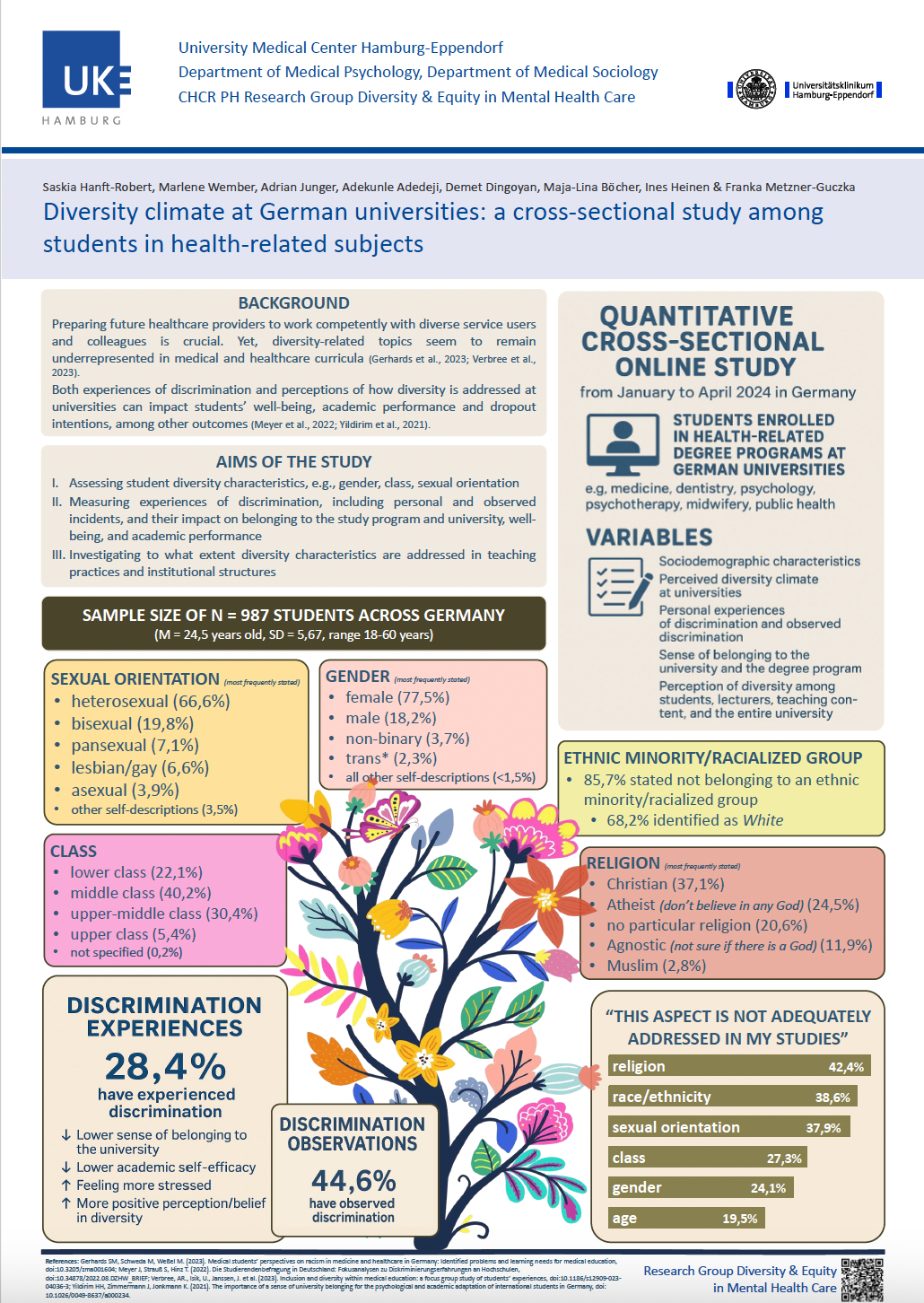
Diversity climate at German universities: A cross-sectional study among students in health-related subjects
Diversity is essential in higher education, particularly in health-related degree programs, where inclusive and non-discriminatory learning environments are crucial for promoting equity and preparing future health care professionals to care for diverse patient populations. Yet, there is still limited empirical insight into how students in Germany perceive diversity within their universities.
To address this gap, we conducted a national cross-sectional online survey between January and April 2024 among students enrolled in health-related programs across Germany. The study explored students’ perceptions of the diversity climate and examined how experiences of discrimination are associated with psychosocial and academic outcomes. Measures included sociodemographic and educational characteristics, perceptions of diversity climate (across three dimensions: age, ethnicity, gender), experiences and observations of discrimination, diversity- and equity-oriented beliefs, sense of belonging to the university, study engagement, general and academic self-efficacy, and general and study-related stress.
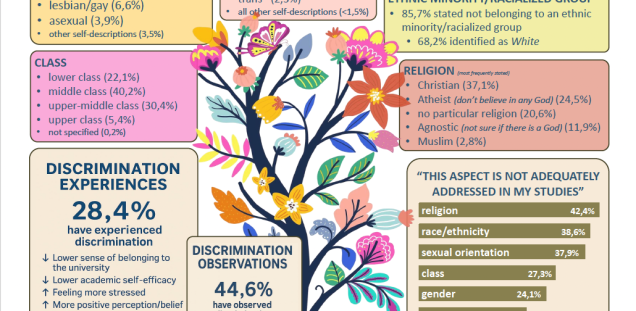
A total of 987 students from 83 universities across all 16 federal states participated. Perceptions of the diversity climate were moderately to highly positive across age (M = 3.91/5, SD = .59), ethnicity (M = 3.63/5, SD = .65), and gender (M = 3.83/5, SD = .59). While the majority reported no personal discrimination, 28% experienced discrimination within the past two years, most commonly due to gender (42%), physical appearance (23%), mental health (20%), or race (13%). Additionally, 45% had witnessed discrimination. Students with personal discrimination experiences reported significantly lower positive perceptions of the diversity climate, lower academic self-efficacy, study engagement, and belonging to the university, higher stress, and stronger diversity- and equity-oriented beliefs. Across the full sample, 61% indicated that teaching materials do not adequately represent diverse groups, and 50% perceived lecturers as insufficiently responsive to discrimination.
The full study will be published soon.
Diversity in university and higher education teaching of health-related degree programs in Germany (2024-2026)
[Funded by the Department of Medical Psychology, UKE]
Diversity is essential in higher education, particularly in health-related degree programs, where inclusive and non-discriminatory learning environments are crucial for promoting equity and preparing future health care professionals to care for diverse patient populations. Yet there remains limited empirical insight into how students in Germany perceive diversity within their universities.
To address this gap, we conducted a national cross-sectional online survey between January and April 2024 among students enrolled in health-related programs across Germany. The study explored students’ perceptions of the diversity climate and examined how experiences of discrimination are associated with psychosocial and academic outcomes. Measures included sociodemographic and educational characteristics; perceptions of the diversity climate (across three dimensions: age, ethnicity, gender); experiences and observations of discrimination; diversity- and equity-oriented beliefs; sense of belonging to the university; study engagement; general and academic self-efficacy; and general and study-related stress.
Link to study, published in BMC Medical Education, here.
Second Symposium on “Diversity in Medical Education” (May 19, 2026)
To mark the 14th German Diversity Day, themed “When Diversity Wins, We All Win,” the 2nd Diversity Symposium for and with students took place on May 19, 2026, from 9:00 a.m. to 4:30 p.m. at the University Medical Center Hamburg-Eppendorf (UKE) on the Teaching Campus. The event was organized by the 2nd Track in Psychosocial Medicine and Health Services Research (PSM) and the 2nd Track in Global Health, Cultural Competence, and International Medicine (intermed), together with the Diversity & Equity Working Group in Psychosocial Health Care. As in 2025, the symposium was planned and carried out in cooperation with the student representatives BVMD-MMR - Medicine and Human Rights, Medical Students for Choice Hamburg (MSFC), MSV – Mit Sicherheit verliebt, and AntiraMed. Nearly 140 students in their 2nd, 4th, 6th, and 8th semesters from both 2nd Tracks were able to participate in the symposium’s activities.
First Symposium on “Diversity in Medical Education” (May 26, 2025)
[Funded by the Claussen-Simon Foundation]
To mark the 13th German Diversity Day, our symposium “Diversity in Medical Education”—organized by and for students—took place on May 26, 2025, from 9 a.m. to 3 p.m. at the University Medical Center Hamburg-Eppendorf. The event, funded by the Claussen-Simon Foundation, was organized in cooperation with the student organizations GenDiv, MMR – Medicine and Human Rights, Medical Students for Choice Hamburg, and MSV – Mit Sicherheit verliebt.
-
Activities
24. Deutschen Kongress für Versorgungsforschung (DKVF) [German Congress for Health Services Research]
from 22 - 24 September 2025 in Hamburg
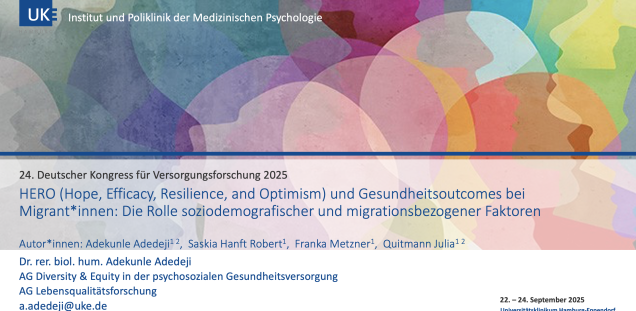
- “HERO (Hope, Efficacy, Resilience, and Optimism) und Gesundheitsoutcomes bei Migrant*innen: Die Rolle soziodemografischer und migrationsbezogener Faktoren” [HERO (Hope, Efficacy, Resilience, and Optimism) and health outcomes among migrants: The role of sociodemographic and migration-related factors]
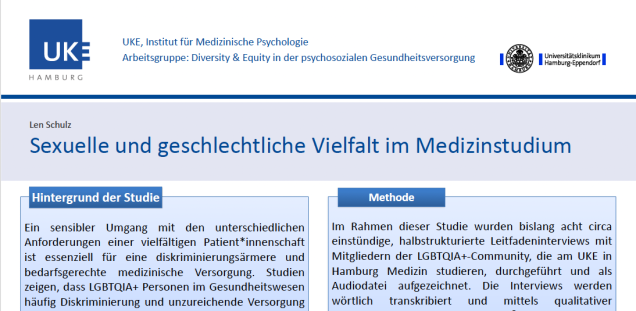
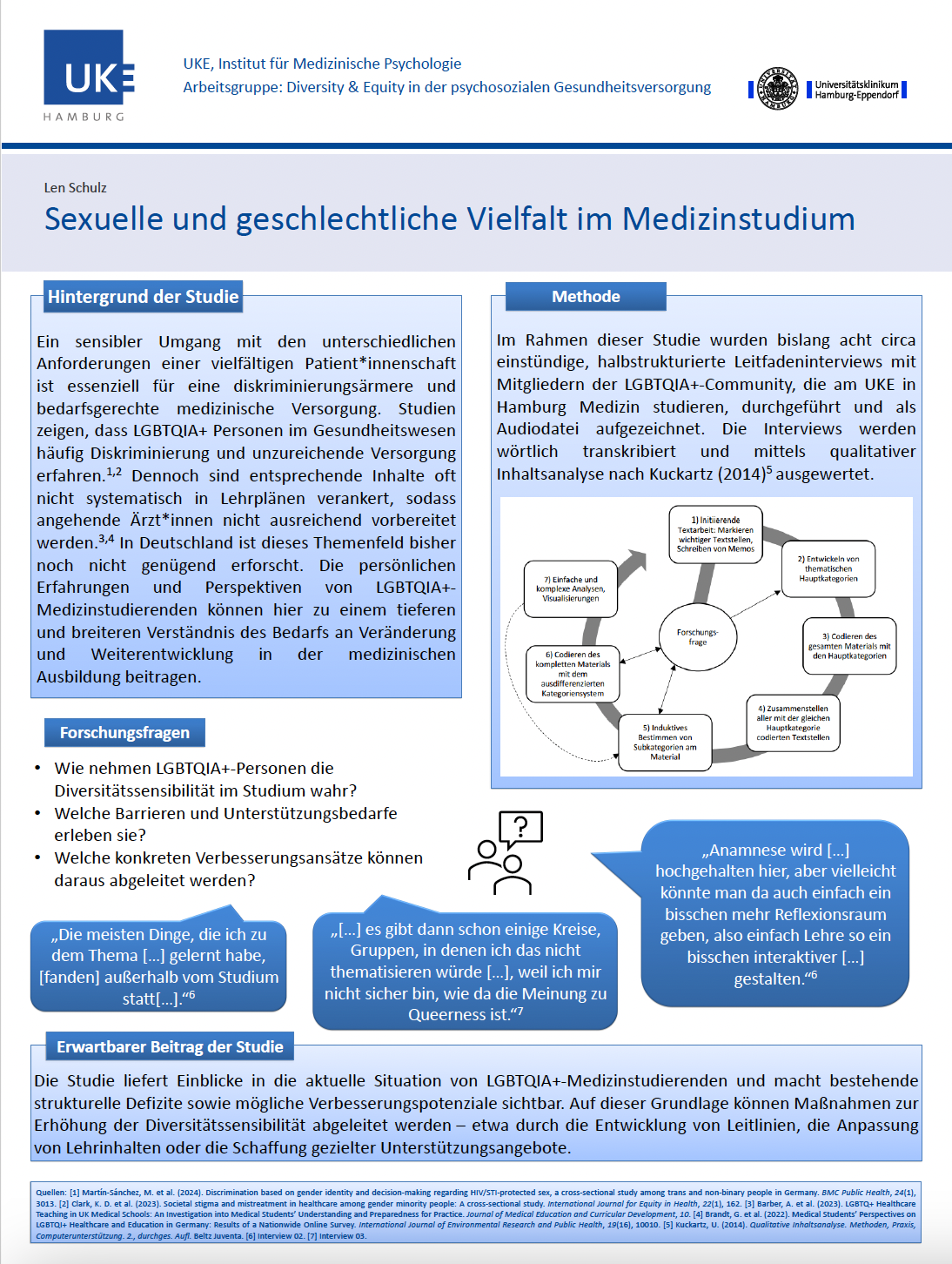
(Lecture: Dr. Adekunle Adedeji) - “Sexuelle und geschlechtliche Vielfalt im Medizinstudium” [Sexual and gender diversity in medical studies]
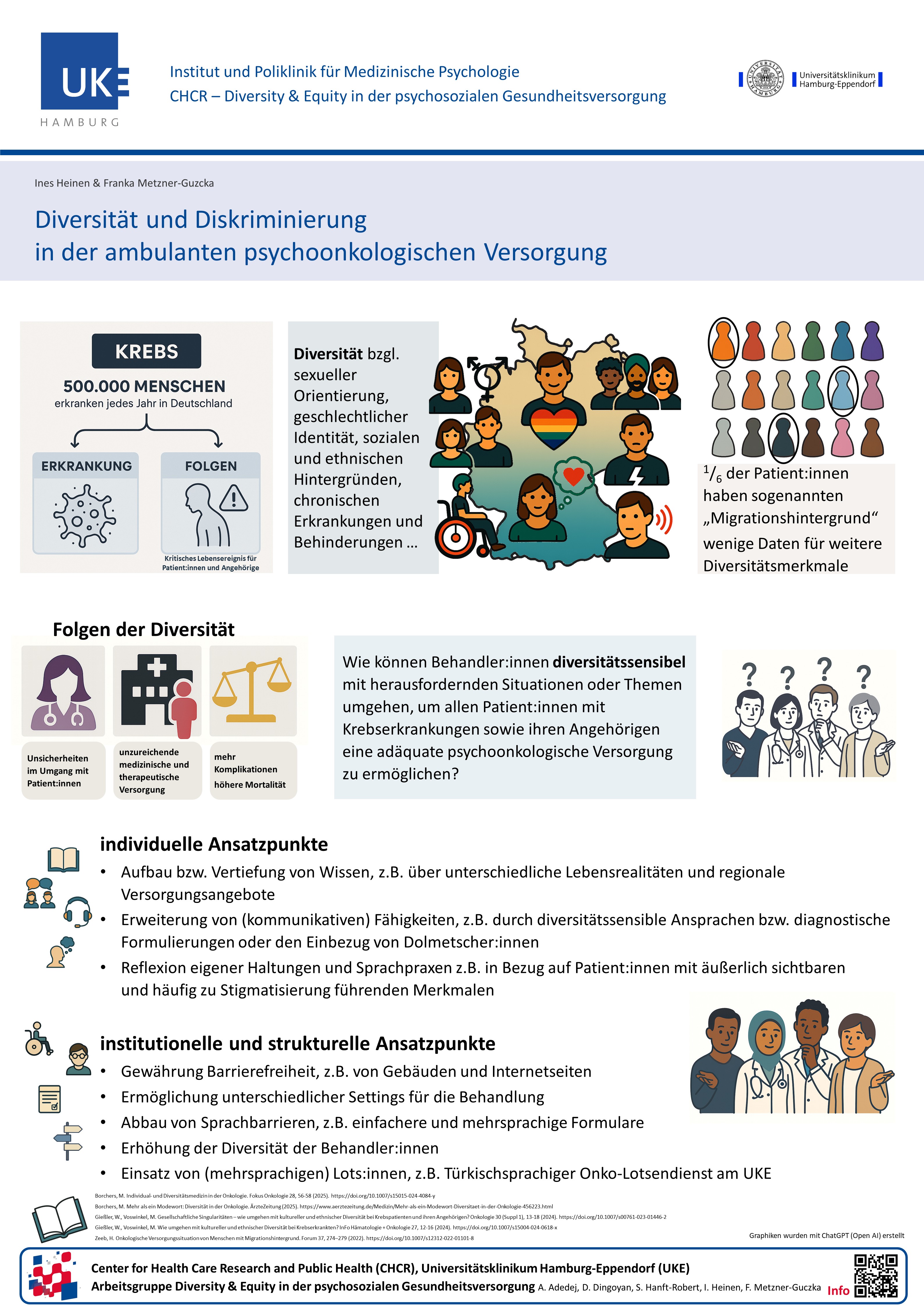
(poster presentation: Len Schulz) - “Diversität und Diskriminierung in der ambulanten psychoonkologischen Versorgung” [Diversity and discrimination in outpatient psycho-oncological care]
(poster presentation: Dr. Ines Heinen) - “Diversity climate at German universities: a cross-sectional study among students in health-related subjects.”
(poster presentation: Dr. Saskia Hanft-Robert)

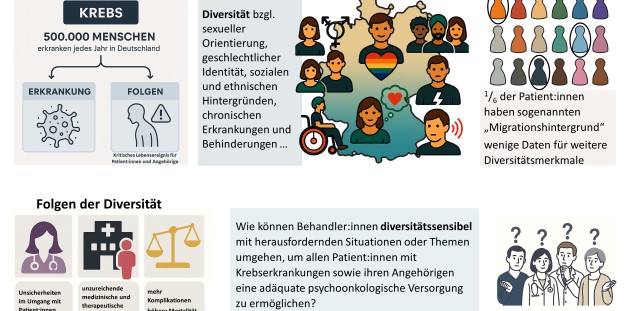
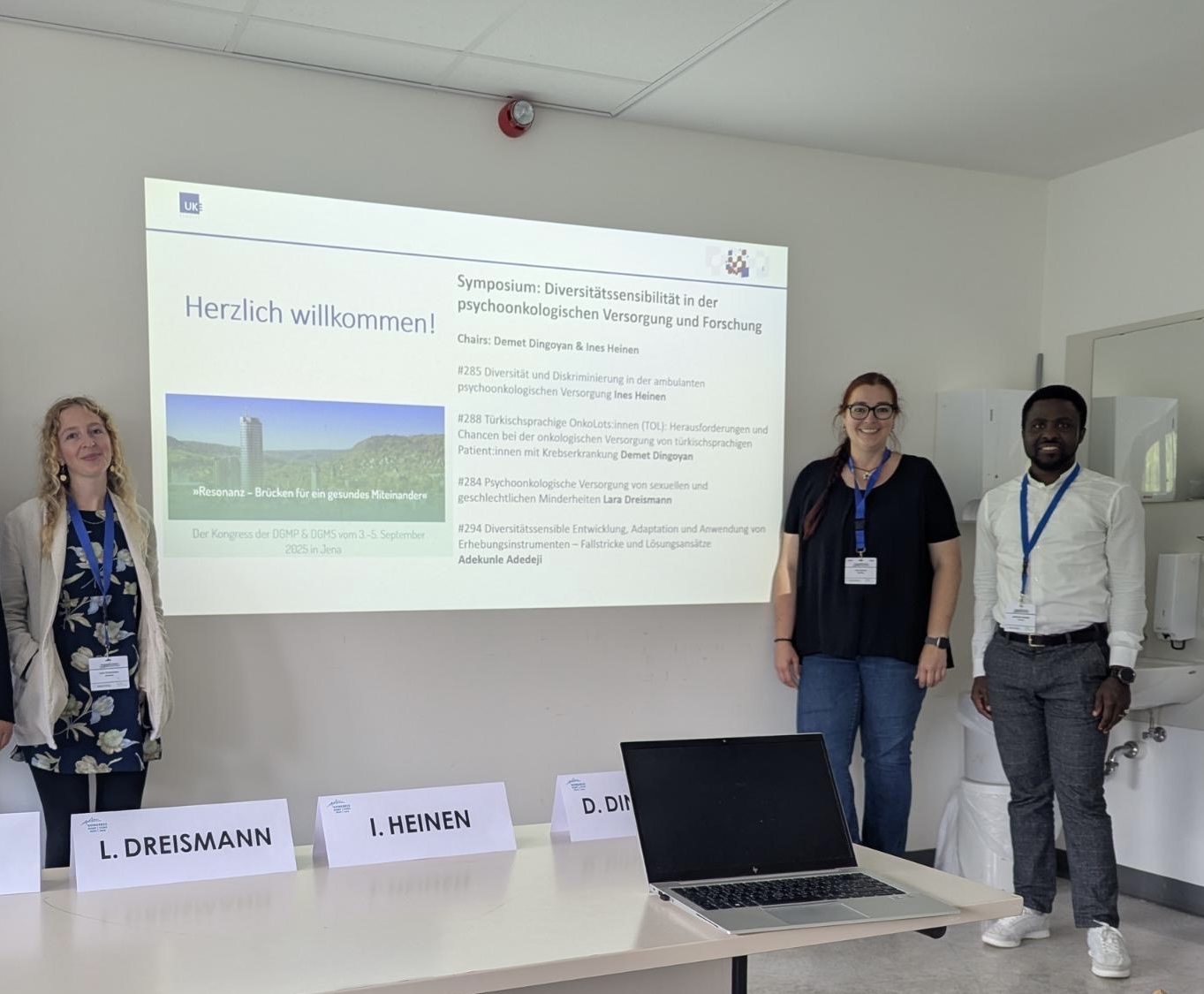
Kongress der Deutschen Gesellschaft für Medizinische Psychologie und der Deutschen Gesellschaft für Medizinische Soziologie [Congress of the German Society for Medical Psychology and the German Society for Medical Sociology]
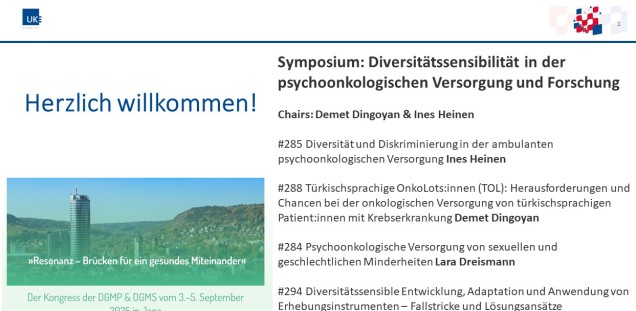
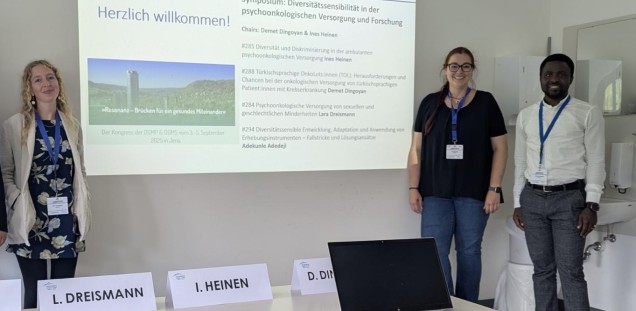
from 3 - 5 September 2025 in Jena“Diversitätssensibilität in der (psycho-)onkologischen Versorgung und Forschung” [Diversity sensitivity in (psycho-)oncological care and research] - Organization of a symposium with presentations by:
- Dr. Franka Metzner-Guczka, Dr. Saskia Hanft-Robert & Dr. Ines Heinen: “Diversität und Diskriminierung in der ambulanten psychoonkologischen Versorgung” [Diversity and discrimination in outpatient psycho-oncological care]
- Dr. Demet Dingoyan & colleagues: Türkischsprachige Onko-Lots:innen (TOL): “Herausforderungen und Chancen bei der onkologischen Versorgung von türkischsprachigen Patient:innen mit Krebserkrankung” [Turkish-speaking oncology navigators (TOL): “Challenges and opportunities in the oncological care of Turkish-speaking patients with cancer”]
- Dr. Lara Dreismann: “Psychoonkologische Versorgung von sexuellen und geschlechtlichen Minderheiten” [Psycho-oncological care for sexual and gender minorities]
- Dr. Adekunle Adedeji: “Diversitätssensible Entwicklung, Adaptation und Anwendung von Erhebungsinstrumenten – Fallstricke und Lösungsansätze” [Diversity-sensitive development, adaptation, and application of survey instruments—pitfalls and solutions]
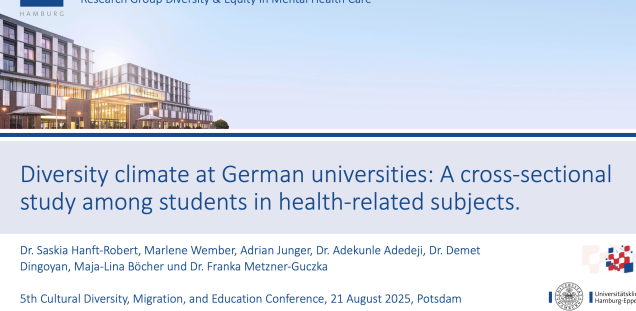
5th Cultural Diversity, Migration, and Education Conference
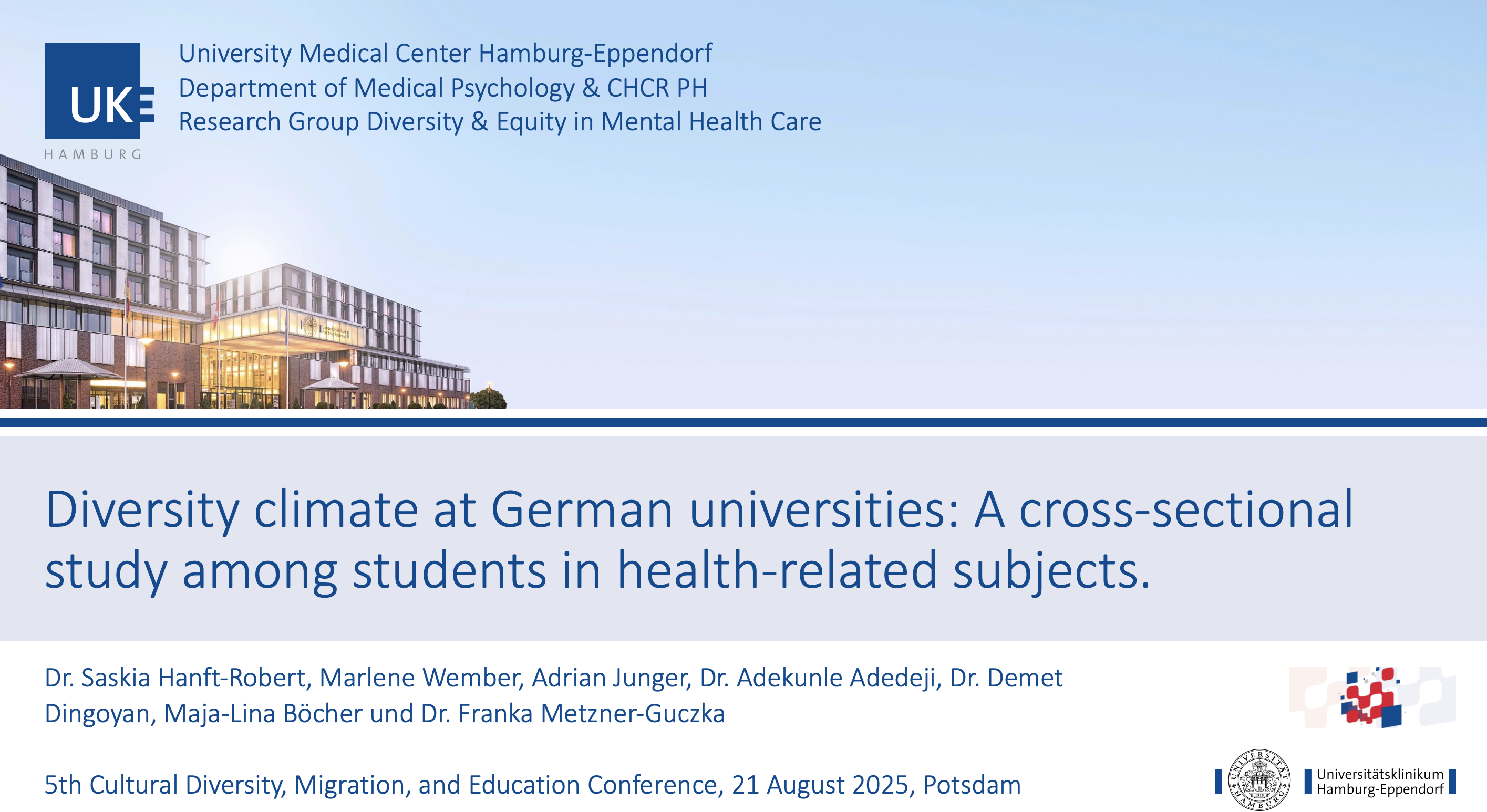
from 19 – 21 August in Berlin- “Diversity climate at German universities: A cross-sectional study among students in health-related subjects.” (presentation by Dr. Saskia Hanft-Robert)
XVII. UCC Hamburg Research Retreat 2025
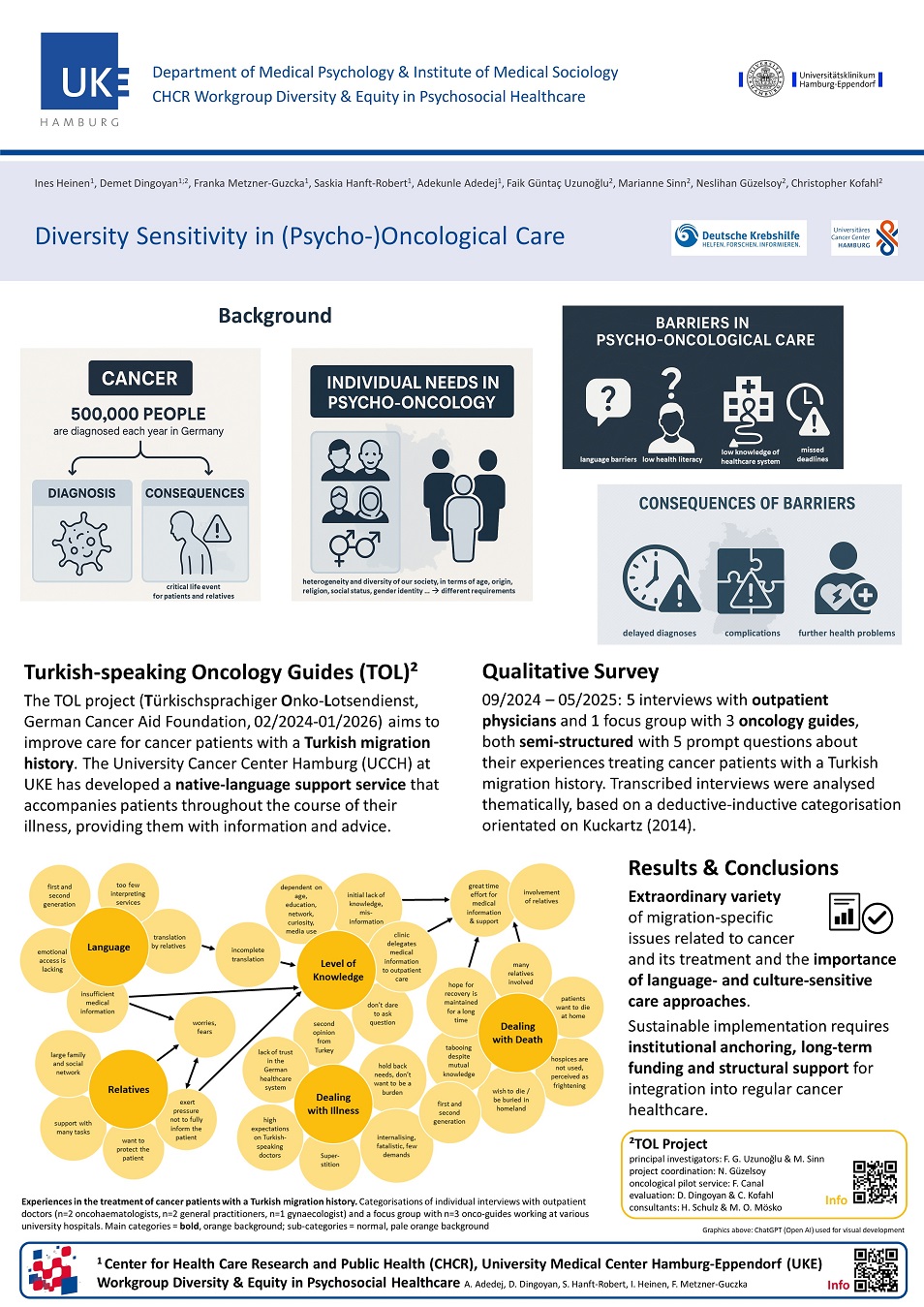
from 11 – 12 July 2025 in Hamburg- “Diversity sensitivity in (psycho)oncological care” (Poster presentation by Dr. Ines Heinen and Dr. Demet Dingoyan – winners of the poster prize)
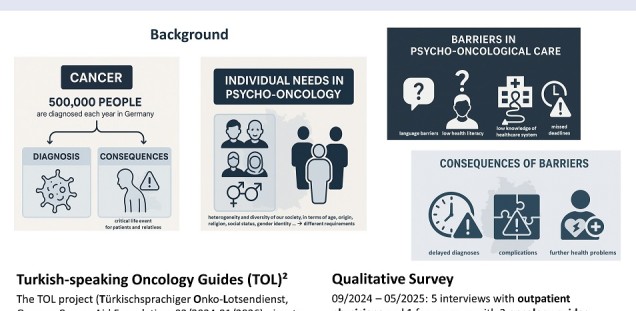
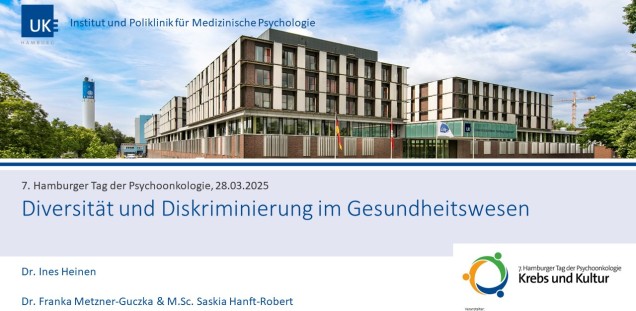
7. Hamburger Tag der Psychoonkologie „Krebs und Kultur“ [7th Hamburg Psycho-Oncology Day “Cancer and Culture”]
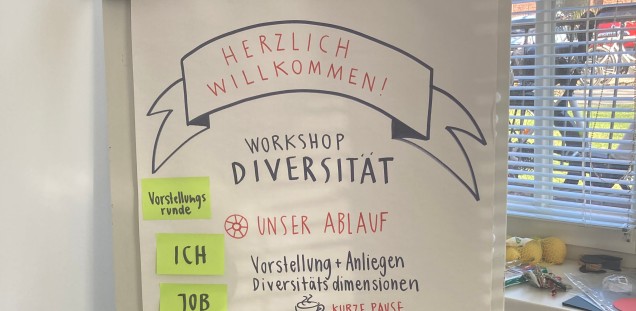
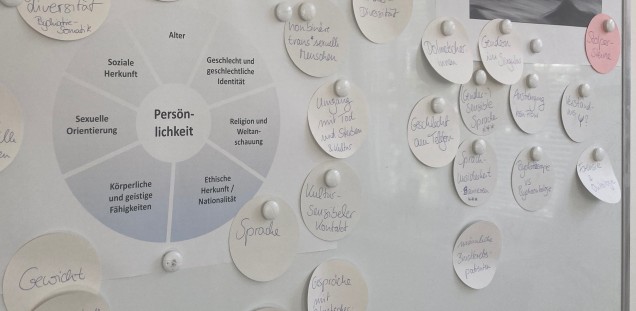
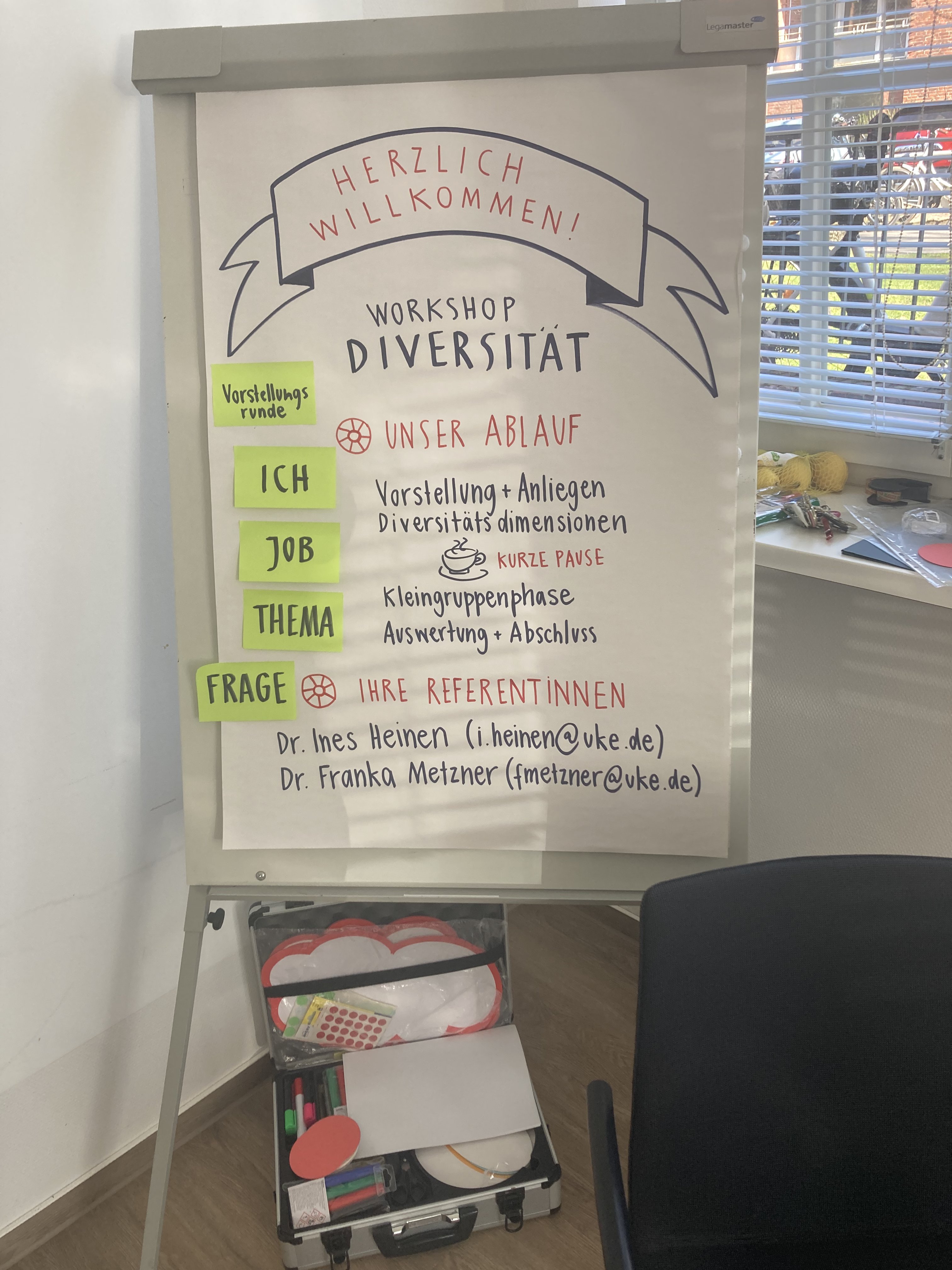
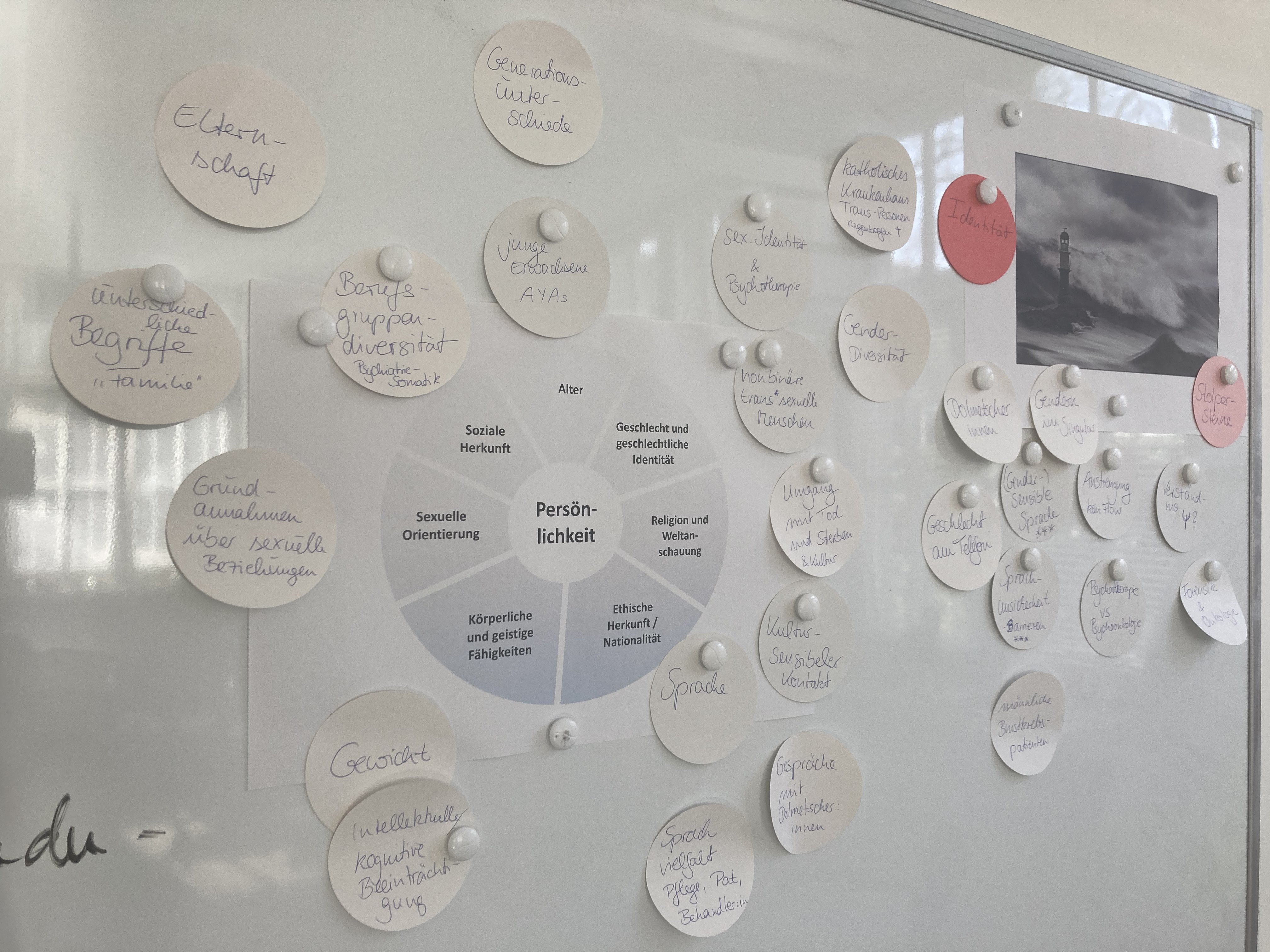
28 March 2025 in Hamburg- Workshop on “Implementing diversity-sensitive communication in psycho-oncology” by Dr. Ines Heinen and Dr. Franka Metzner-Guczka
- Presentation of the topic „Diversität und Diskriminierung in der Gesundheitsversorgung“ von Dr. Ines Heinen, Dr. Franka-Metzner-Guczka und M.Sc. Saskia Hanft-Robert
Hamburger Symposium Versorgungsforschung und Public Health (CHCR & PH) [Hamburg Symposium on Health Services Research and Public Health (CHCR & PH)]
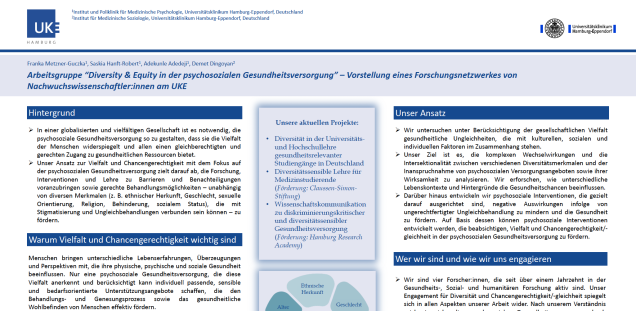
6 December 2024 in Hamburg- “Vorstellung eines Forschungsnetzwerkes von Nachwuchswissenschaftler:innen am UKE” [Presentation of a research network of young scientists at the UKE]
(Poster presentation by Dr. Ines Heinen and Dr. Franka Metzner-Guczka)
- “HERO (Hope, Efficacy, Resilience, and Optimism) und Gesundheitsoutcomes bei Migrant*innen: Die Rolle soziodemografischer und migrationsbezogener Faktoren” [HERO (Hope, Efficacy, Resilience, and Optimism) and health outcomes among migrants: The role of sociodemographic and migration-related factors]


-
Team
We are a team of researchers with over a decade of experience in health, social, and humanitarian research. Our commitment to diversity and equity shapes every aspect of our work. We recognise that psychosocial healthcare is deeply influenced by intersectional processes, which can present challenges in addressing structural barriers and meeting individual health needs. Through our efforts, we strive to contribute to equitable access and inclusive healthcare tailored to diverse needs.
We warmly welcome individuals and experts passionate about this field to join us in fostering collaboration and exchanging ideas.
Student Research Projects, Teaching, and Events / Presentations and Conference Participation
For inquiries regarding undergraduate and postgraduate research projects, teaching activities, and collaborative events.
For inquiries regarding invited presentations and joint participation in conferences, including the organization of symposia.
 Dr. phil. Dipl.-Psych.Franka Metzner-Guczka
- Psychological psychotherapist
- Research fellow
E-mail Dr. rer. biol. hum. Dipl.-Psych.Ines Heinen
- Teaching coordinator
PhoneE-mailResearch Projects and Third-Party Funding Applications
For inquiries regarding research collaborations and applications for external research funding.
 Dr. phil.Demet Dingoyan
- Psychological psychotherapist
- Research fellow
PhoneE-mailNetworking
For inquiries regarding professional exchange, collaboration opportunities, and networking with our research group.
 Priv.-Doz. Dr. rer. biol. hum.Sylvia von Mackensen
- Research fellow
- Fakultätsbeauftragte für schwerbehinderte Studierende
E-mail