 UKE homepage?
 DE
DE
Profiling cellular targets of emerging and circulating orthoflaviviruses
Summary
Orthoflaviviruses, such as Dengue virus (DENV); Japanese-encephalitis virus (JEV) and West-Nile virus (WNV), represent an increasing public health challenge, due to their rising incidence and their ability to cause severe disease in humans and animals. Currently, there are no clinically-approved small molecules inhibitors for the treatment of flavivirus infections, and innovative therapeutic approaches are urgently needed. This project aims to identify novel therapeutic targets, using a combination of advanced systems biology methods (proteomics, transcriptomics and interactomics) to identify cellular proteins required by these viruses to infect and proliferate in human cells. By taking this approach we hope to identify new virus achille’s heels and develop novel, broad-spectrum antiviral inhibitors for the treatment and prevention of arboviral infections.
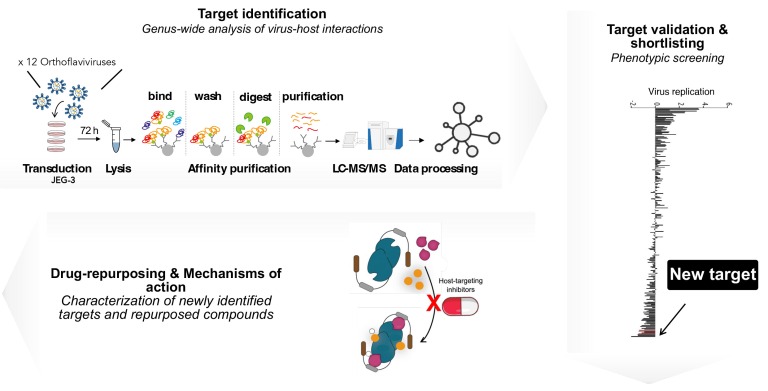
Our Work Packages (WP):
WP1: Target identification - profiling cellular targets of different orthoflaviviruses in human cells using proteomics approaches.
WP2: Target shortlisting and phenotypic screening – assessing replication of a large group of pathogenic orthoflaviviruses in the absence of identified cellular factors.
WP3: Drug-repurposing and mechanism of actions – testing existing or newly-developed small molecule inhibitors for their antiviral potential and characterize their relevance in viral replication.
These work packages allow us to identify new cellular targets with sub- or pan-viral activities, and to assess their therapeutic potential for the treatment of circulating and emerging flaviviruses in humans.
Team
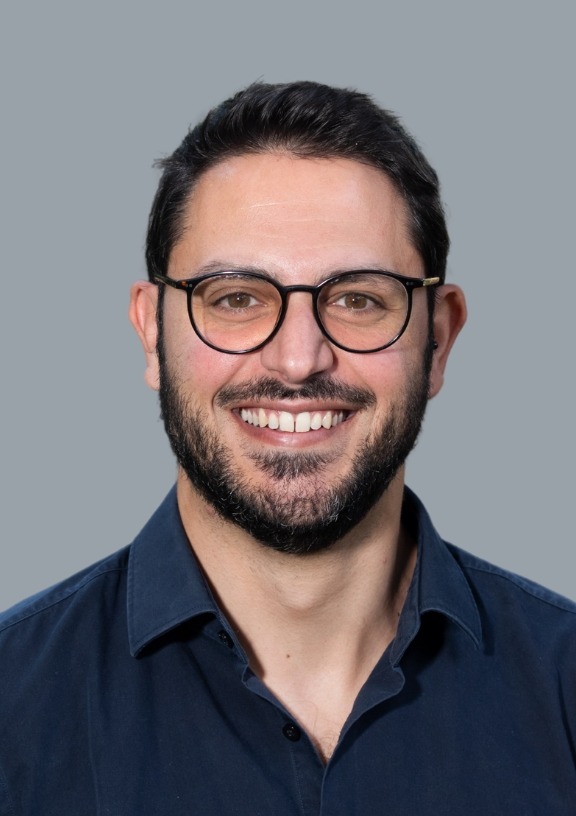
Dr. Pietro Scaturro
Principal Investigator
E-mail address:
Phone: +49 (0)40 48051-330

Research Group Scaturro
The Research Group Systems Arbovirology is based at the Leibniz Institute of Virology (LIV).