Research at the UKE?
 DE
DE
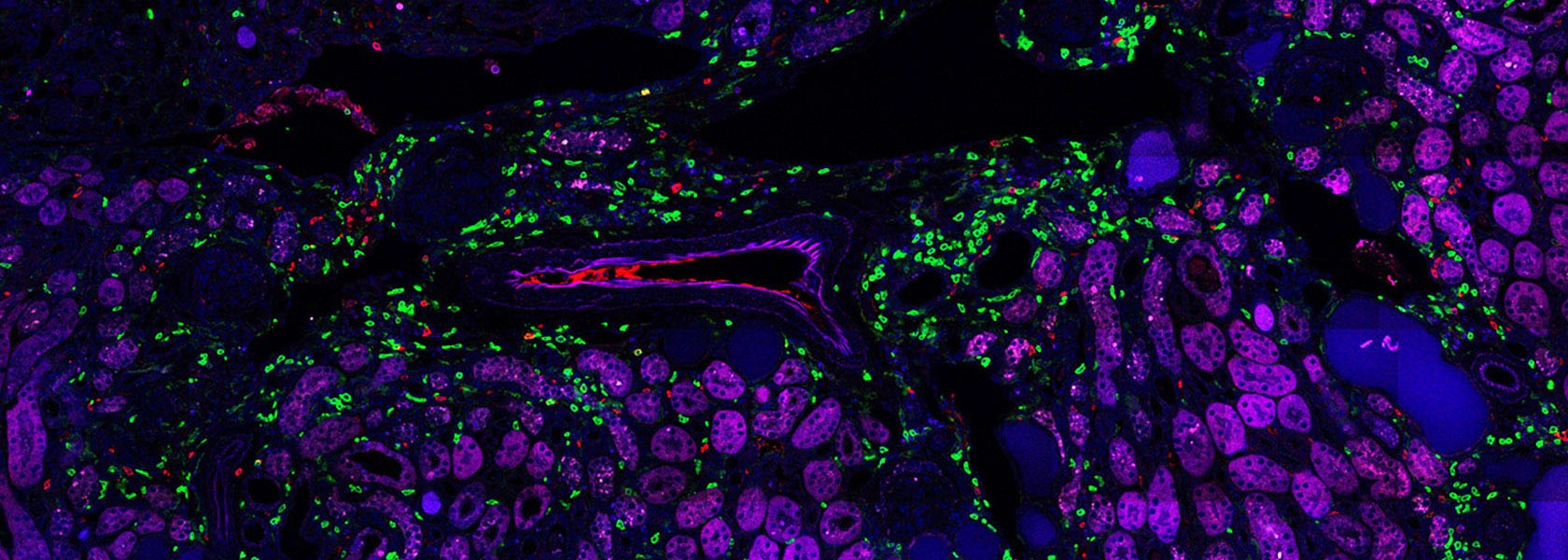

Kidney Immunology
“Improving the understanding of tissue-specific immunity in the kidney”
Prof. Dr. Ulf Panzer
/ck_final_3_st_plus_768x1.jpg)
"Targeting pro-inflammatory T cell responses in renal autoimmunity"
Prof. Dr. Christian Krebs
Project details and goals
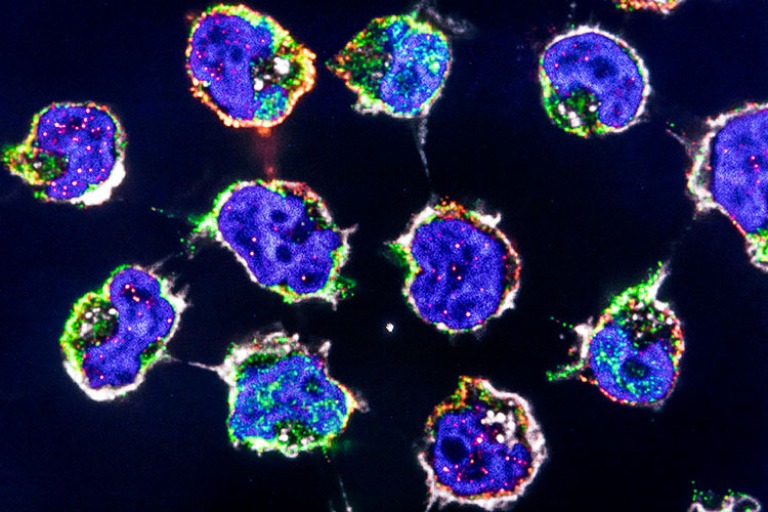
CD4+ T cells are crucial in autoimmune and chronic inflammatory diseases by coordinating the immune response. Characterizing specific cytokine-producing CD4+ T cell subsets has enhanced our understanding of organ-specific immunity mechanisms. However, many aspects of T cell behavior and regulation in kidney damage remain unclear.
To address this gap, we will use multiomics approaches to:
- investigate T cell migration mechanisms, including retention and emigration;
- study Type I and Type III immune responses and their associated receptors and chemokines in kidney diseases;
- conduct a high-dimensional analysis of CD4+ T cell responses through systems immunological methods.
In summary, our research aims to deeply understand the CD4+ T cell chemokine network and its role in immunomediated glomerulonephritis, laying the groundwork for pathogenesis-based anti-cytokine treatments or specific depletion of pathogenic renal T cells.
Current projects – Panzer Lab
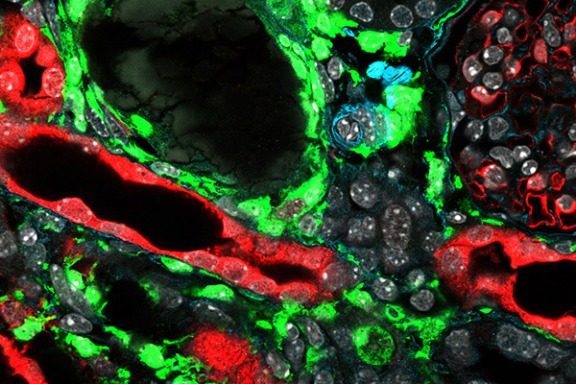
Mechanisms and function of CD4+ T cell trafficking in crescentic GN
CD4+ T cells are pivotal in orchestrating immune responses, including in autoimmune conditions like crescentic glomerulonephritis (cGN). The migration of these T cells to target organs and their effector functions are crucial in both protective and pathological responses. Understanding the dynamics of T cell subsets, such as TH1, TH17, and Treg cells, in the kidney is essential for elucidating disease mechanisms. Experimental models reveal that T cell infiltration, rather than proliferation or apoptosis, primarily drives renal inflammation in cGN. Investigating T cell emigration from the kidney via lymphatic vessels will provide insights into resolving or perpetuating local immune reactions, impacting tissue-resident memory T cell function. The "Kaede mouse system" offers a promising tool to study T cell migration in the kidney and its implications for immune regulation.
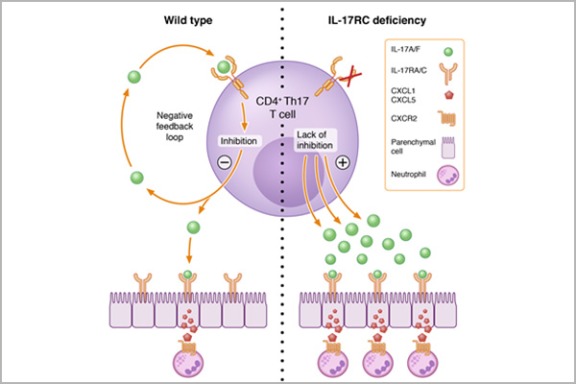
Renal CD4+ T cell cytokine network – Translational regulation and function of IL-17 cytokine mRNAs
The Th17/IL-17 pathway is implicated in tissue-specific immunity, particularly in immune-mediated kidney diseases. Despite advancements, understanding the regulation and biological functions of IL-17 cytokines and their receptors remains incomplete. Research shows that CD4+ tissue-resident memory T cells (TRM cells) express proinflammatory cytokine mRNAs without causing inflammation under normal conditions but may contribute to pathology in glomerular diseases upon stimulation. Further investigation revealed that the integrated stress response (ISR) / eukaryotic translation initiation factor 2α (eIF2α) pathway regulates cytokine production in CD4+ TRM cells, with activation of ISR/eIF2α under homeostasis storing cytokine mRNA and preventing inflammation, while under inflammatory conditions, dephosphorylation of eIF2α leads to immediate cytokine translation, suggesting tight control of TRM cell effector functions.
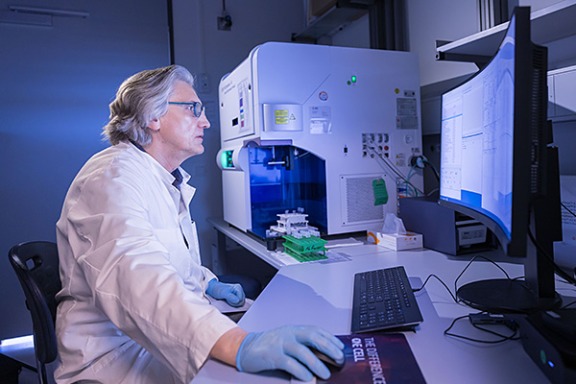
CD4+ T cell subsets and their signature cytokines in crescentic GN patients
The understanding of pathogenic CD4+ T-cell-driven immune responses, particularly Th1 and Th17, in crescentic glomerulonephritis (GN) largely stems from animal models, with limited analysis in patients. Identifying disease-promoting CD4+ T-cell populations and cytokines in crescentic GN patients remains incomplete but is crucial for translating findings to clinical practice, as seen in other immune-mediated diseases like psoriasis and rheumatoid arthritis. Collaborative efforts have established platforms for analyzing T-cell subsets in renal tissue injury, aiming to decode the CD4+ T-cell immune signature in ANCA-GN patients using single-cell and spatial transciptomic techniques. This interdisciplinary approach involves nephrology, immunology, and systems biology, relying on clinical data and multi-OMIC analysis to generate a comprehensive CD4+ T-cell immune signature atlas, which could inform pathogenesis-based treatment strategies.
Current projects – Krebs Lab
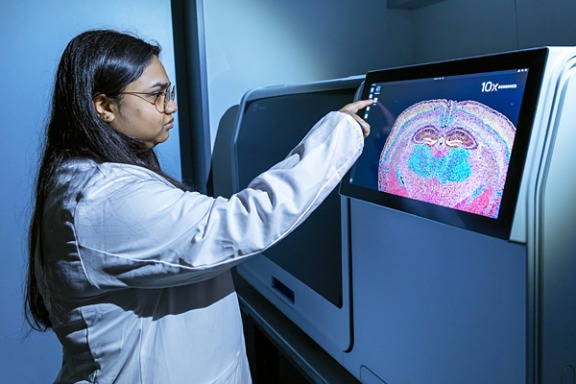
Crosse-tissue T cell clonality and role of intestinal microbiota from patients with glomerulonephritis
Interorgan homeostasis and tissue crosstalk is a complex, yet curial system for immune cell function. Here, we aim to investigate the interorgan relationship of T cells in patients with glomerulonephritis (GN) by analyzing T cell receptor sequences and RNA expression profiles in peripheral blood, kidney, lung, and colon tissues. Preliminary results show the feasibility of identifying developmental trajectories of renal T cells. Additionally, the we plan to assess the composition of intestinal microbiota and metabolites in patients with ANCA-GN and healthy controls using metagenomic sequencing and metabolomics. Bioinformatics analysis will integrate single-cell RNA sequencing data with microbiota and metabolite data to identify connections between T cell populations, microbial metabolites, and signaling pathways, facilitating a comprehensive understanding of immune-microbiota interactions in GN
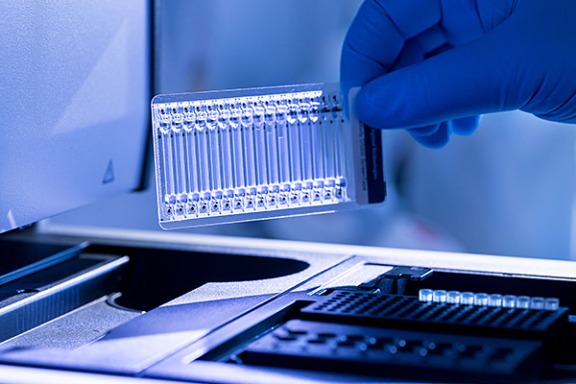
Regulation of Th17 cell tissue adaption
The Th17 immune response is a key driver of immune mediated kidney disease. Here, we aim to investigate the role of transcription factors in regulating Th17 cell phenotypes in experimental glomerulonephritis (GN), particularly focusing on identifying factors contributing to pathogenic and regulatory stages of Th17 cells. We plan to generate Th17 cells deficient for specific transcription factors and utilize a pooled screening approach to further investigate transcription factors and intracellular pathways. Additionally, we will investigate the role of selected candidate genes potentially involved in tissue adaptation using a CRISPR/Cas9 approach in mouse models of GN and colitis, aiming to narrow down promising candidates for further functional testing. The iCROP-seq screening approach will allow us to assess the impact of different genes on tissue-specific T cell adaptation, particularly focusing on transcription factors upregulated in Th17 cells specific to kidney or shared among different tissues.
Deciphering the role of the intestinal microbiota in impacting Th17 cell tissue-adaptation
Germ-free mice and antibiotic-treated mice show reduced Th17 cells in the kidney and are protected against nephritis development, suggesting the crucial role of the intestinal microbiota. We collected stool samples from ANCA-GN patients and healthy controls to investigate the microbiota's composition and microbial metabolites. Based on these analyses we will induce this microbiota signature in germ-free mice. The impact of microbiota transfer on renal T cell responses will be analyzed. Furthermore, patient-specific gnotobiotic mice and oligoclonal mice will be investigated to overcome TCR repertoire variations. Antibiotic treatment-induced T cell modulation in the intestine will be studied, assessing its effect on disease severity, microbiota, metabolites, and T cell plasticity in both intestine and kidney.
Publications 2025
Sultana, Z., Khatri, R., Yousefi, B. et al. Nat Immunol 26, 1977–1988 (2025). https://doi.org/10.1038/s41590-025-02291-8
Abstract
Rapidly progressive glomerulonephritis (RPGN) is the most aggressive group of autoimmune kidney diseases and is characterized by glomerular crescent formation with proliferation of parietal epithelial cells (PECs). However, the underlying mechanisms of glomerular crescent formation are incompletely understood. Here we provide a high-resolution spatial kidney cell atlas of 57 samples from patients with RPGN (ANCA-associated GN, lupus nephritis and anti-glomerular basement membrane-GN) to characterize the cell signaling pathways in glomerular crescent development. Early platelet-derived growth factor (PDGF) signaling from epithelial and mesangial cells caused PEC activation and proliferation in glomerular crescents, whereas later transforming growth factor (TGF)-β signaling from macrophages, T cells and epithelial and mesangial cells triggered expression of extracellular matrix components in PECs associated with glomerulosclerosis and disease progression. These findings were similar across the different GNs and were functionally validated in experimental GN by PDGF and TGFβ blockade. These results highlight a spatiotemporally conserved progression program into glomerular crescents and sclerosis and indicate new treatment options for autoimmune kidney disease.
Asada N, Ginsberg P, Paust HJ, Song N, Riedel JH, Turner JE, Peters A, Kaffke A, Engesser J, Wang H, Zhao Y, Khatri R, Gild P, Dahlem R, Diercks BP, Das S, Ignatova Z, Huber TB, Prinz I, Gagliani N, Mittrücker HW, Krebs CF, Panzer U. Nat Immunol. 2025 Apr;26(4):557-566.
Abstract
Tissue-resident memory T (TRM) cells are a specialized T cell population that reside in tissues and provide a rapid protective response upon activation. Here, we showed that human and mouse CD4+ TRM cells existed in a poised state and stored messenger RNAs encoding proinflammatory cytokines without protein production. At steady state, cytokine mRNA translation in TRM cells was suppressed by the integrated stress response (ISR) pathway. Upon activation, the central ISR regulator, eIF2α, was dephosphorylated and stored cytokine mRNA was translated for immediate cytokine production. Genetic or pharmacological activation of the ISR–eIF2α pathway reduced cytokine production and ameliorated autoimmune kidney disease in mice. Consistent with these results, the ISR pathway in CD4+ TRM cells was downregulated in patients with immune-mediated diseases of the kidney and the intestine compared to healthy controls. Our results indicated that stored cytokine mRNA and translational regulation in CD4+ TRM cells facilitate rapid cytokine production during local immune response.
Publications 2024
Abstract
Antineutrophil cytoplasmic antibody (ANCA)-associated vasculitis is a life-threatening autoimmune disease that often results in kidney failure caused by crescentic glomerulonephritis (GN). To date, treatment of most patients with ANCA-GN relies on non-specific immunosuppressive agents, which may have serious adverse effects and be only partially effective. Here, using spatial and single-cell transcriptome analysis, we characterize inflammatory niches in kidney samples from 34 patients with ANCA-GN and identify proinflammatory, cytokine-producing CD4+ and CD8+ T cells as a pathogenic signature. We then utilize these transcriptomic profiles for digital pharmacology and identify ustekinumab, a monoclonal antibody targeting IL-12 and IL-23, as the strongest therapeutic drug to use. Moreover, four patients with relapsing ANCA-GN are treated with ustekinumab in combination with low-dose cyclophosphamide and steroids, with ustekinumab given subcutaneously (90 mg) at weeks 0, 4, 12, and 24. Patients are followed up for 26 weeks to find this treatment well-tolerated and inducing clinical responses, including improved kidney function and Birmingham Vasculitis Activity Score, in all ANCA-GN patients. Our findings thus suggest that targeting of pathogenic T cells in ANCA-GN patients with ustekinumab might represent a potential approach and warrants further investigation in clinical trials.
Abstract
Pro-inflammatory CD4+ T cells are major drivers of autoimmune diseases, yet therapies modulating T cell phenotypes to promote an anti-inflammatory state are lacking. Here, we identify T helper 17 (TH17) cell plasticity in the kidneys of patients with antineutrophil cytoplasmic antibody-associated glomerulonephritis on the basis of single-cell (sc) T cell receptor analysis and scRNA velocity. To uncover molecules driving T cell polarization and plasticity, we established an in vivo pooled scCRISPR droplet sequencing (iCROP-seq) screen and applied it to mouse models of glomerulonephritis and colitis. CRISPR-based gene targeting in TH17 cells could be ranked according to the resulting transcriptional perturbations, and polarization biases into T helper 1 (TH1) and regulatory T cells could be quantified. Furthermore, we show that iCROP-seq can facilitate the identification of therapeutic targets by efficient functional stratification of genes and pathways in a disease- and tissue-specific manner. These findings uncover TH17 to TH1 cell plasticity in the human kidney in the context of renal autoimmunity.
Publications 2023
Abstract
Adaptation of immune cells to tissue-specific microenvironments is a crucial process in homeostasis and inflammation. Here, we show that murine effector type 2 innate lymphoid cells (ILC2s) from various organs are equally effective in repopulating ILC2 niches in other anatomical locations where they adapt tissue-specific phenotypes of target organs. Single-cell transcriptomics of ILC2 populations revealed upregulation of retinoic acid (RA) signaling in ILC2s during adaptation to the small intestinal microenvironment, and RA signaling mediated reprogramming of kidney effector ILC2s toward the small intestinal phenotype in vitro and in vivo. Inhibition of intestinal ILC2 adaptation by blocking RA signaling impaired worm expulsion during Strongyloides ratti infection, indicating functional importance of ILC2 tissue imprinting. In conclusion, this study highlights that effector ILC2s retain the ability to adapt to changing tissue-specific microenvironments, enabling them to exert tissue-specific functions, such as promoting control of intestinal helminth infections.
Abstract
GM-CSF in glomerulonephritisDespite glomerulonephritis being an immune-mediated disease, the contributions of individual immune cell types are not clear. To address this gap in knowledge, Paust et al. characterized pathological immune cells in samples from patients with glomerulonephritis and in samples from mice with the disease. The authors found that CD4+ T cells producing granulocyte-macrophage colony-stimulating factor (GM-CSF) licensed monocytes to promote disease by producing matrix metalloproteinase 12 and disrupting the glomerular basement membrane. Targeting GM-CSF to inhibit this axis reduced disease severity in mice, implicating this cytokine as a potential therapeutic target for patients with glomerulonephritis.
Abstract
γδ T cells are involved in the control of Staphylococcus aureus infection, but their importance in protection compared to other T cells is unclear. We used a mouse model of systemic S. aureusinfection associated with high bacterial load and persistence in the kidney. Infection caused fulminant accumulation of γδ T cells in the kidney. Renal γδ T cells acquired tissue residency and were maintained in high numbers during chronic infection. At day 7, up to 50% of renal γδ T cells produced IL-17A in situ and a large fraction of renal γδ T cells remained IL-17A+ during chronic infection. Controlled depletion revealed that γδ T cells restricted renal S. aureus replication in the acute infection and provided protection during chronic renal infection and upon reinfection. Our results demonstrate that kidney-resident γδ T cells are nonredundant in limiting local S. aureus growth during chronic infection and provide enhanced protection against reinfection.
Previous publications
Zhao Y, Kilian C, Turner JE, Bosurgi L, Roedl K, Bartsch P, Gnirck AC, Cortesi F, Schultheiß C, Hellmig M, Enk LUB, Hausmann F, Borchers A, Wong MN, Paust HJ, Siracusa F, Scheibel N, Herrmann M, Rosati E, Bacher P, Kylies D, Jarczak D, Lütgehetmann M, Pfefferle S, Steurer S, Zur-Wiesch JS, Puelles VG, Sperhake JP, Addo MM, Lohse AW, Binder M, Huber S, Huber TB, Kluge S, Bonn S, Panzer U, Gagliani N, Krebs CF. Sci Immunol. 2021 Feb 23;6(56):eabf6692. doi:10.1126/sciimmunol.abf669 PMID: 33622974; PMCID: PMC8128299.
Abstract
Hyperinflammation contributes to lung injury and subsequent acute respiratory distress syndrome with high mortality in patients with severe coronavirus disease 2019 (COVID-19). To understand the underlying mechanisms involved in lung pathology, we investigated the role of the lung-specific immune response. We profiled immune cells in bronchoalveolar lavage fluid and blood collected from patients with severe COVID-19 and patients with bacterial pneumonia not associated with viral infection. By tracking T cell clones across tissues, we identified clonally expanded tissue-resident memory-like TH17 cells (TRM17 cells) in the lungs even after viral clearance. These TRM17 cells were characterized by a potentially pathogenic cytokine expression profile of IL17A and CSF2 (GM-CSF). Interactome analysis suggests that TRM17 cells can interact with lung macrophages and cytotoxic CD8+ T cells, which have been associated with disease severity and lung damage. High IL-17A and GM-CSF protein levels in the serum of patients with COVID-19 were associated with a more severe clinical course. Collectively, our study suggests that pulmonary TRM17 cells are one potential orchestrator of the hyperinflammation in severe COVID-19.
Krebs CF, Reimers D, Zhao Y, Paust HJ, Bartsch P, Nuñez S, Rosemblatt MV, Hellmig M, Kilian C, Borchers A, Enk LUB, Zinke M, Becker M, Schmid J, Klinge S, Wong MN, Puelles VG, Schmidt C, Bertram T, Stumpf N, Hoxha E, Meyer-Schwesinger C, Lindenmeyer MT, Cohen CD, Rink M, Kurts C, Franzenburg S, Koch-Nolte F, Turner JE, Riedel JH, Huber S, Gagliani N, Huber TB, Wiech T, Rohde H, Bono MR, Bonn S, Panzer U, Mittrücker HW. Sci Immunol. 2020 Aug 7;5(50):eaba4163. doi:10.1126/sciimmunol.aba4163. PMID: 32769171.
Abstract
Th17 cells are most abundant in the gut, where their presence depends on the intestinal microbiota. Here, we examined whether intestinal Th17 cells contribute to extra-intestinal Th17 responses in autoimmune kidney disease. We found high frequencies of Th17 cells in the kidneys of patients with antineutrophil cytoplasmatic antibody (ANCA)-associated glomerulonephritis. We utilized photoconversion of intestinal cells in Kaede mice to track intestinal T cell mobilization upon glomerulonephritis induction, and we found that Th17 cells egress from the gut in a S1P-receptor-1-dependent fashion and subsequently migrate to the kidney via the CCL20/CCR6 axis. Depletion of intestinal Th17 cells in germ-free and antibiotic-treated mice ameliorated renal disease, whereas expansion of these cells upon Citrobacter rodentium infection exacerbated pathology. Thus, in some autoimmune settings, intestinal Th17 cells migrate into target organs, where they contribute to pathology. Targeting the intestinal Th17 cell “reservoir” may present a therapeutic strategy for these autoimmune disorders.
Team – Panzer Lab


Prof. Dr. med. Ulf Panzer
Head
E-mail address:










Team – Krebs Lab


Prof. Dr. med. Christian Krebs
Head
E-mail address: