EN
EN
News
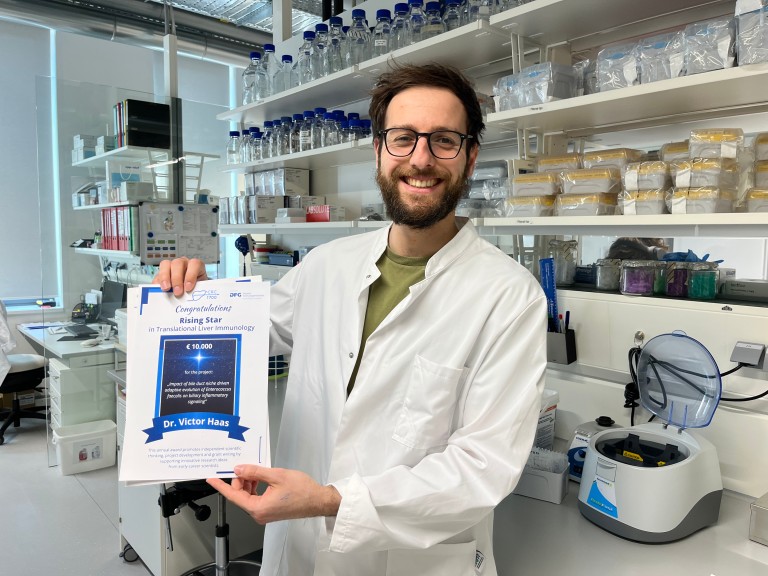
Rising Star Award 2026 goes to Dr. Victor Haas
Hamburg, April 8, 2026 – The Collaborative Research Centre 1700 (CRC 1700) has named Dr. Victor Haas (Project B03, led by Prof. Dr. med. Christoph Schramm) as the first recipient of the Rising Star Award in Translational Liver Immunology 2026, recognizing his innovative project on how bacterial adaptation in the bile ducts influences liver inflammation. The award, endowed with €10,000 and funded by the German Research Foundation (DFG) as part of the CRC 1700 funding framework, supports outstanding early-career researchers and promotes independent scientific thinking, innovative project development and grant writing.
Dr. Haas’ project addresses a central question in liver immunology: how bacteria adapt to the unique and challenging environment of the bile ducts and how these adaptations influence inflammatory processes in the liver. The bile duct represents a highly specialized niche, shaped by bile acids, immune surveillance and constant flow, yet certain bacteria are able to persist and are associated with disease progression in chronic liver conditions.
Building on previous findings, the project investigates how bacteria such as Enterococcus faecalis adapt over time within the human body and how these changes affect their interaction with the host. By combining patient-derived samples with experimental models, the research aims to better understand how microbial adaptation influences immune responses in the bile ducts and contributes to liver disease.
With its strong translational perspective, the project links microbial evolution to disease-relevant immune mechanisms and may uncover previously unrecognized pathways of immune regulation in the liver. The results will be presented at the CRC 1700 Annual Meeting in September.
The Rising Star Award is open to doctoral and postdoctoral researchers as well as clinician scientists affiliated with CRC 1700. Applicants were invited to submit short project proposals aligned with the CRC’s overarching theme, “Immune regulation in the liver: from homeostasis to disease.” Dr. Haas’ proposal stood out for its scientific originality and its interdisciplinary approach at the interface of microbiology and liver immunology.
Rare Disease Day 2026 at the UKE
We cordially invite you to an information event on Rare Disease Day 2026, Wednesday, 25 February 2026, in the foyer of the UKE's main building O10.
From 9 a.m. to 12 noon, you are welcome to attend our information event with poster exhibition.
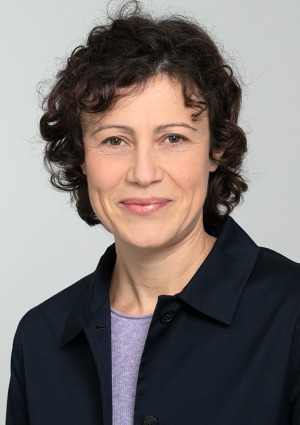
Lidia Bosurgi has been accepted into the DFG-funded Heisenberg Programme
Lidia Bosurgi, PhD , who works as an independent junior research group leader in the I. Department of Medicine at the UKE has been accepted into the DFG's Heisenberg Programme. This programme enables outstanding scientists, who meet all the requirements for a long-term professorship, to prepare for a scientific leadership position while conducting advanced research.
We warmly congratulate her on this major milestone.
For more information on Dr Bosurgi's projects in the CRC 1700, follow the links to
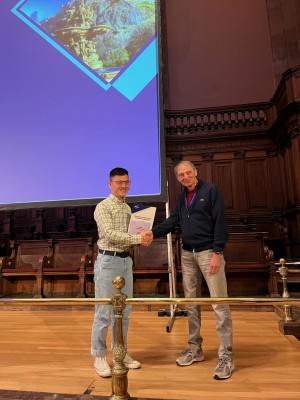
New CRC 1700 junior research group leader Hao Huang receives EMDS Young Investigator Award
At this year's European Macrophage and Dendritic Cell Society meeting in Edinburgh, Dr Hao Huang was presented with the Young Investigator Award in recognition of his scientific work. The award was presented by the outgoing EMDS president, Prof. Dr. Thomas Decker. We congratulate Dr Huang on this award and wish him every success in his research when he starts in Hamburg on 1 January 2026.
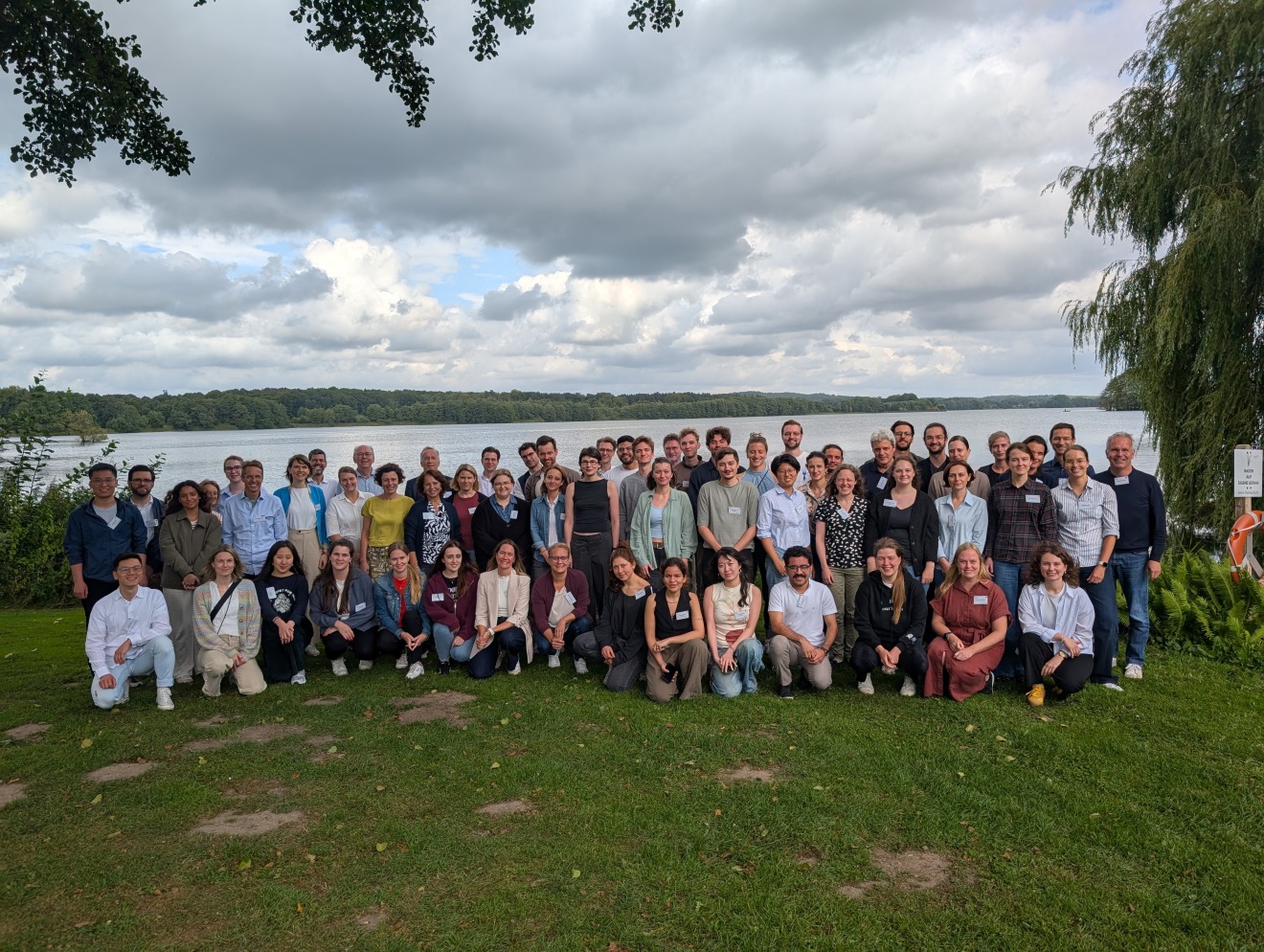
CRC 1700 Kick-Off Retreat at Seehotel Töpferhaus
From 3–5 September 2025, CRC 1700 “Immune regulation in the liver: from homeostasis to disease” held its first retreat at the Seehotel Töpferhaus by the Bistensee. Although the consortium officially started on 1 April 2025, this retreat marked the scientific kick-off with all members on site. The aim was to welcome our newly recruited PhD and MD students, strengthen collaboration within the CRC, and provide space for scientific exchange in an inspiring setting.
The opening day was dedicated to the Integrated Research Training Group (iRTG). Most PhD and MD students joined the programme between April and September, with a few more to follow in October. They were introduced to the CRC and the iRTG, presented their projects in short talks, and had plenty of opportunities for networking – from icebreakers to a scavenger hunt through the beautiful lakeside landscape. A highlight was the lecture by Mercator Fellow Dr Fotios Sampaziotis (Cambridge Stem Cell Institute) on lab-grown bile ducts and novel approaches to treating biliary diseases. In the evening, the iRTG student representatives Marie Abele, Lucas Bergmann and Mirco Torheiden were elected.
On days two and three, the scientific programme shifted to the broader consortium. All 15 projects, support structures, and the equal opportunities programme were presented. Early career researchers who had recently been associated to the CRC gave inspiring talks, and participants attended a session on AI in scientific writing. In between, breaks were filled with swimming, kayaking, or volleyball by the lake, allowing both relaxation and informal exchange.
The retreat was a very successful start into the upcoming three-year funding period of CRC 1700. Collaborations were formed and can now be expanded, first results were shared, and our PhD and MD students – the next generation of researchers – were fully integrated into the consortium. With motivation and strong team spirit, we are looking forward to three exciting years of joint research on liver immune regulation, aiming to deliver new insights that will ultimately benefit patients.
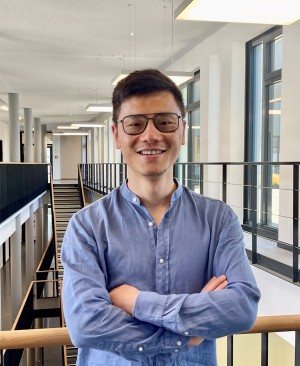
Kick-off for the new Junior Research Group – Hao Huang will join the CRC consortium in January 2026
The new Junior Research Group Leader Hao Huang earned his bachelor’s degree in Pharmacy from Wuhan University in China and then pursued a master’s in Biomedical Sciences at Maastricht University in the Netherlands. Following his master’s thesis at Charité in Berlin, he was admitted to the PhD program at the Max Delbrück Center in Berlin and carried out his doctoral research at the Center for Immunology in Marseille-Luminy (2017-2019) and Center for Regenerative Therapy Dresden (2019-2021). In 2022, he joined Elvira Mass’s laboratory (LIMES Institute, Bonn) for his postdoctoral research.
The scientific focus of Hao Huang lies on understanding the diverse and dynamic roles of macrophages in various organs, with the ultimate goal of harnessing their functions for disease modulation. The liver hosts several macrophage populations with Kupffer cells (KCs) being the most abundant. Hao Huang recently identified that offspring KCs are developmentally programmed during gestation by maternal obesity and serve as intergenerational messengers transferring fatty liver disease risk from obese mothers to their offspring.
In CRC1700, he will investigate newly identified macrophage populations in the liver, and elucidate their functions in homeostasis, as well as in autoimmune liver diseases, such as primary sclerosing cholangitis.
We are very much looking forward to working and networking with Hao and warmly welcome him to our CRC.
CRC 1700 Seminar Series started
The Seminar Series of our Colloaborative Research Centre CRC 1700 "Immune regulation in the liver: from homeostasis to disease" started.
We welcome guest speakers to give an interesting talk on every first Monday of the month 5 p.m. to 6 p.m. at UKE Campus (HCTI, N25 ground floor SR 0.02).
If you are interested to join the seminar via Zoom please get in touch with the coordination team (
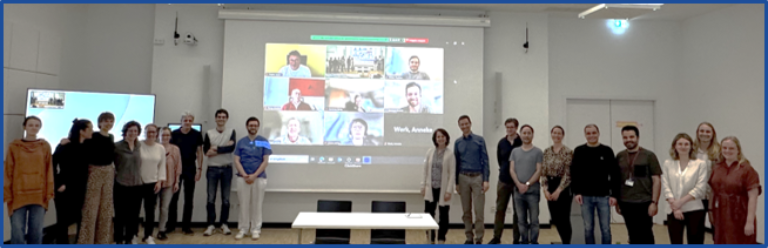
Project Kick-off meeting
On 15th of April the project PIs got together to celebrate the start of the first funding period. The Speaker and Co-Speaker of the CRC as well as the Scientific Steering Committee and the Steering Committee of the Central Biobank were officially elected. The project speaker Christoph Schramm gave an overview on obligations and opportunities within the CRC. We are looking forward to 3.75 exciting years of liver research!
The CRC 1700 is launched
The new consortium was launched on 1.4.25. We warmly welcome all the newly recruited scientists who have started work on their exciting projects.
We also welcome our Scientific Advisory Board (SAB). We are looking forward to the scientific exchange and discussions with Prof. Dr. Robert Thimme (UK Freiburg) and Prof. Dr. Stefan Rose-John (Kiel).
The consortium will also be accompanied by two international experts, Fotis Sampaziotis (Cambridge UK) and Mala Maini (University College London, UK) in their role as Mercator Fellows.
DFG to Fund Seven New Collaborative Research Centres - DFG Press Realease No. 47
Our Colloaborative Research Centre CRC 1700 "Immune regulation in the liver: from homeostasis to disease" was decided to be funded by the responsible DFG Grants Committee in Bonn to further support top-level reasearch.
Follow us on Social Media: