 UKE Homepage
 DE
DE

Research Group Twerenbold
Digital innovation, biomarkers and genetics
Aim:
We aim …. to understand pathophysiological mechanisms leading to atherosclerotic cardiovascular disease including genetics,
... to explore the clinical diagnostic or prognostic utility of established and emerging biomarkers for early identification of prevalent or incident (subclinical) cardiovascular disease and
... to develop innovative AI-enhanced digital tools to aid as clinical decision support tools for personalized cardiovascular care.
Scope of Research
Digital transformation • Biomarkers • Genetics • Artificial Intelligence • Diagnosis • Risk prediction • Precision medicine
Research Projects
1. Acute Cardiac Care:
Driven by our clinical work in the emergency department and chest pain unit, we aim to improve the early triage and diagnosis of myocardial infarction and other acute cardiovascular diseases. For nearly two decades, we are committed to improve personalized triage and diagnosis by the optimal use of circulating biomarkers such as troponin and others, the integration of digital ECG information and the development of comprehensive yet applicable AI-enhanced risk prediction and classification tools, such as our ARTEMIS-model (ACS Pathfinder; www.acs-pathfinder.com).
2. Population-Based Prevention:
Preventing cardiovascular disease before it develops is a cornerstone of today´s cardiovascular care. To improve long-term risk prediction and proactive prevention, we investigate the influence of genetic predispositions and exposomal factors on disease emergence. Our research includes genetic studies in individuals with premature myocardial infarction, coronary artery disease, and metabolic disorders like hyperlipidemia, diabetes, and chronic kidney disease. We leverage data from the very deeply phenotyped Hamburg City Health Study (HCHS) on a local, the MONICA Risk, Genetics, Archiving and Monograph (MORGAM) Consortium on a European and the Global Cardiovascular Research Consortium (GCVRC) on a global scale.
3. AI-driven personalized medicine:
We are committed to let AI-methods not only revolutionize our private living, but also how we treat patients in cardiovascular care. Thereby, we do not stop by the development of AI-enhanced digital prediction models, but are considering from the very beginning all other relevant steps until they reach bedside. This includes external validation and calibration, freedom to operate and other IP-related topics, regulatory aspects including certification as a medical product and planning and conduction of prospective implementation trials.
Key Techniques
- Identification of relevant unmet clinical needs: By far our most important technique is the identification of unmet clinical needs as a base for each of our research projects. Driven by our clinical expertise in cardiovascular care, this builds the start and end of any project.
- Pragmatic study designs: Our team has a long-standing experience in the conduction of prospective diagnostic, epidemiological and intervention studies.
- Biomarkers: One of our main interest is to perform the measurement and particularly the clinical evaluation of established and emerging biomarkers including omics-data for diagnostic and prognostic purposes.
- Genetics: Together with our partner institutes in Davos (Cardio-CARE) and Lübeck, we are able to perform state-of-the-art analyses of common and rare variants in whole genome sequencing datasets.
- Advanced statistical methods: Besides the application of conventional statistical methods for data analysis, we are committed to apply machine-learning, deep-learning and other AI-techniques to develop and validate personalized risk prediction and classification models for diagnostic and prognostic purposes.
- Digital transformation of cardiovascular care: We are dedicated not only to develop AI-enhanced digital prediction models, but also to pave the way to make them clinically available as certified medical devices to healthcare professionals, patients and the general population.
Group Members

/bilder/personen/kontaktprofile/neumann_johannes2019_st_plus_300x1.jpg)
/bilder/personen/kontaktprofile/s%C3%B6rensen_nils-arne_st_plus_300x1.jpg)
/bilder/personen/kontaktprofile/arnold_natalie_20211207_0000_2_st_plus_300x1.jpg)

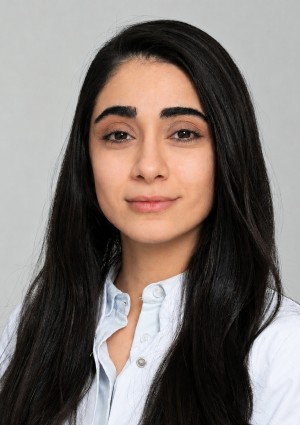
/bilder/personen/kontaktprofile/haller_paul_st_plus_300x1.jpg)
/bilder/personen/kontaktprofile/lehmacher_jonas_20190220_2_2_st_plus_300x1.jpg)
/bilder/personen/kontaktprofile/toprak-bet%C3%BCl_20250918-001_3_st_plus_300x1.jpg)
/bilder/personen/waschki_benjamin_20170517_74-2_st_plus_300x1.jpg)
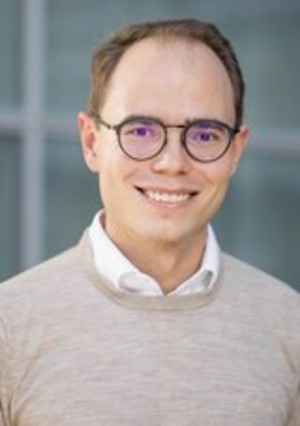


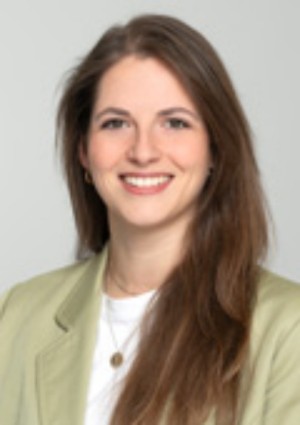
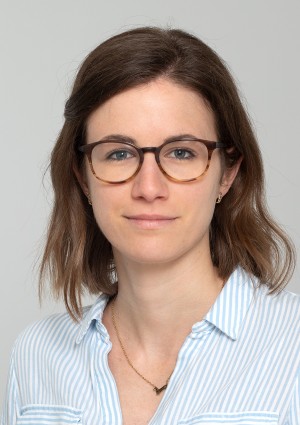

Publications
-
Familial Hypercholesterolemia: Prevalence and Discrepancy between Genotype and Phenotype. Findings of the Population-based Hamburg City Health Study.
Riccio C, Arnold N, Koliopanos G, Link V, Guo L, Betschart RO, Zeller T, Blankenberg S, Ziegler A, Twerenbold R.
Dtsch Arztebl Int. 2025 Sep 19;122(19):511-516. doi: 10.3238/arztebl.m2025.0110. -
Application of High-Sensitivity Troponin in Suspected Myocardial Infarction.
Neumann JT*, Twerenbold R*, Ojeda F, Sorensen NA, Chapman AR, Shah ASV, […], Blankenberg S.
N Engl J Med. 2019;380(26):2529-2540. doi: 10.1056/NEJMoa1803377.
-
Global Effect of Modifiable Risk Factors on Cardiovascular Disease and Mortality.
Global Cardiovascular Risk Consortium; Magnussen C, Ojeda FM, Leong DP, […], Twerenbold R, […],, Ziegler A, Blankenberg S.
N Engl J Med. 2023 Oct 5;389(14):1273-1285. doi: 10.1056/NEJMoa2206916.
-
0/1-Hour Triage Algorithm for Myocardial Infarction in Patients With Renal Dysfunction.
Twerenbold R, Badertscher P, Boeddinghaus J, Nestelberger T, Wildi K, Puelacher C, Sabti Z, Rubini Gimenez M, Tschirky S, du Fay de Lavallaz J, Kozhuharov N, Sazgary L, Mueller D, Breidthardt T, Strebel I, Flores Widmer D, Shrestha S, Miró Ò, Martín-Sánchez FJ, Morawiec B, Parenica J, Geigy N, Keller DI, Rentsch K, von Eckardstein A, Osswald S, Reichlin T, Mueller C.
Circulation. 2018 Jan 30;137(5):436-451. doi: 10.1161/CIRCULATIONAHA.117.028901.
-
Prospective Validation of the 0/1-h Algorithm for Early Diagnosis of Myocardial Infarction.
Twerenbold R*, Neumann JT*, Sörensen NA, Ojeda F, Karakas M, […], Blankenberg S, Westermann D, Mueller C.
J Am Coll Cardiol. 2018 Aug 7;72(6):620-632. doi: 10.1016/j.jacc.2018.05.040.
-
Multi-organ assessment in mainly non-hospitalized individuals after SARS-CoV-2 infection: The Hamburg City Health Study COVID programme.
Petersen EL, Goßling A, Adam G, […], Schäfer I, […],Zeller T, Ziegler A, Thomalla G*, Twerenbold R*, Blankenberg S*.
Eur Heart J. 2022 Mar 14;43(11):1124-1137. doi: 10.1093/eurheartj/ehab914.
Grants/Awards
- Research grant by the Joachim Herz Foundation on Personalized cardiovascular risk prediction (Twerenbold, 2023-2025)
- Research grant by the Kühne Foundation
- Research Grant of the German Society of Cardiology (Toprak)
- Research Grants by the Swiss Society of Cardiology (Twerenbold)
- Research Award of the German Society of Cardiology in „digital innovations in cardiac medicine” (2025, Betül Toprak)
- Advanced Postdoc Mobility Fellowship of the Swiss National Science Foundation (Twerenbold, 2016-2018)
- Annual Research Award of the Swiss Heart Foundation (Twerenbold, 2019)
- Swiss Amgen Cardiology Research Award (Twerenbold, 2018)
- Otto-Hess Trainee Awardof the Swiss Society of Cardiology (Twerenbold, 2016)
- Young Investigator Award of the ESC (Twerenbold, 2010 and 2017)
- Patent: Co-inventor and co-owner of a pending international patent application on a computing device for estimating the probability of myocardial infarction (International Publication Numbers WO2022043229A1, TW202219980A).
- Spin-off: Co-founder and shareholder of ART-EMIS Hamburg GmbH as a spin-off of the UKE dedicated to enable the application of clinical decision support devices in cardiovascular care.
Most important collaboration partners
Internal
- PD Christian Schmidt-Lauber,
MD, Department of Nephrology, managing senior physician and clinician scientist, focus on biomarkers and epidemiology - Julius Obergassel,
MD, Cardiologist in Training, clinician scientist, co-founder of IDM;
- Univ.-Prof. Larissa Fabritz,
Professor in Clinical Cardiology, Focus on inheritable cardiac conditions - Univ.-Prof. Christina Magnussen,
Professor in Clinical Cardiology, Focus on heart failure
External
- Prof. Andreas Ziegler and his research team on cardiovascular genomics,
Medizincampus Davos, Cardio-Care AG Davos, Switzerland,
- Prof. Dr. rer. nat. Tanja Zeller, I
nstitute for Cardiogenetics, University of Lübeck, - International ARTEMIS Research Network on diagnostic studies in suspected myocardial infarction
- Interdisciplinary Research Network of the Hamburg City Health Study (HCHS)
- Research Network of the Global Cardiovascular Research Consortium (GCVRC)